
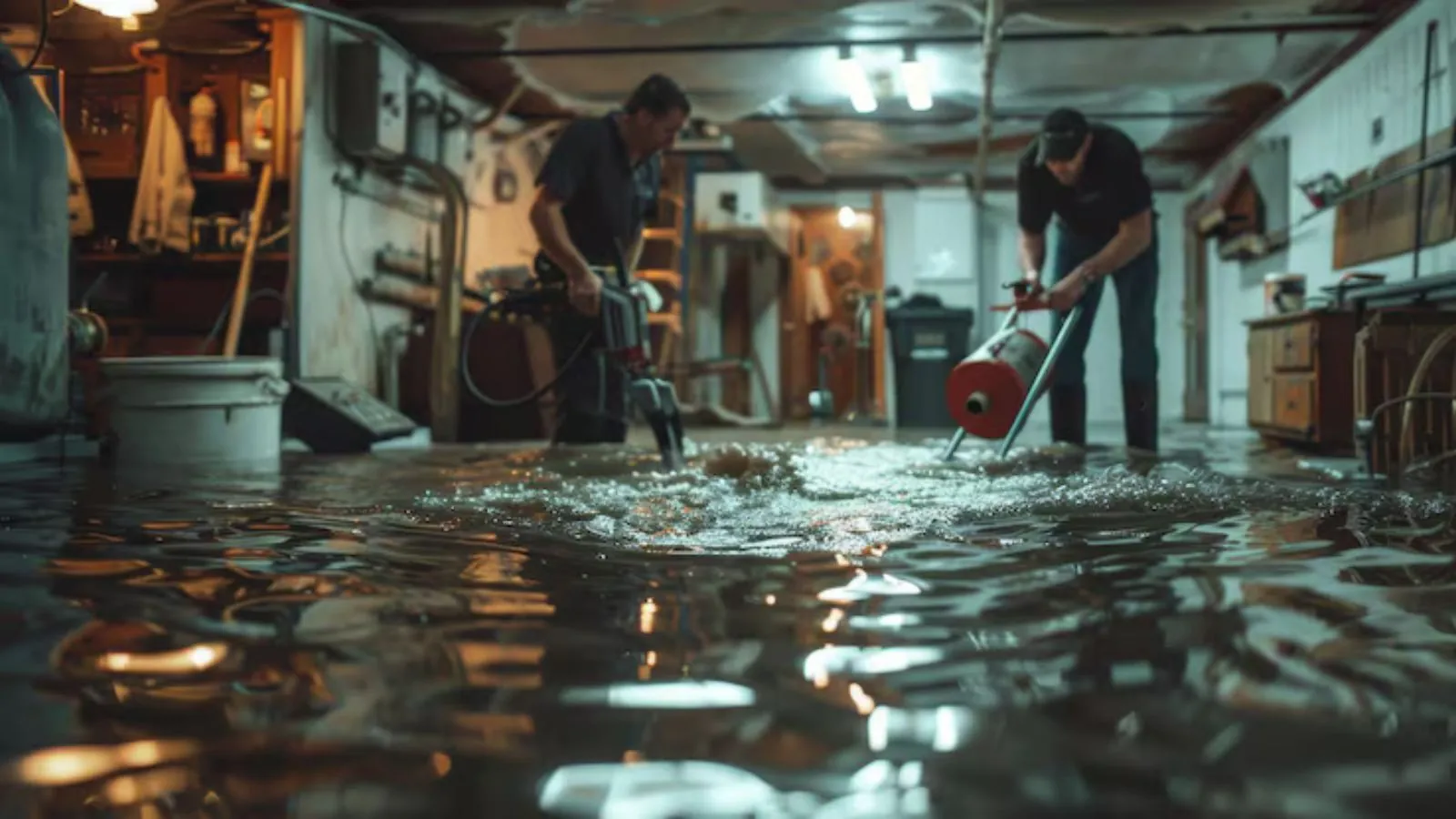
Water extraction is the first physical step of any water loss. Before drying can start, the water sitting on floors and in low spots has to come out, and the sooner it leaves, the less it soaks into carpet, cushion, baseboards and the bottom of walls.
This page covers pumping and extracting standing water in Middleboro. If the water came from a river or storm, see flood damage cleanup. If a pipe is still running, start with burst pipe water damage, because the source has to be stopped first.
When standing water is an emergency
Standing water is an emergency whenever it is deeper than a puddle, whenever it touches walls or electrical gear and whenever it sits on finished flooring. Water spreads sideways and wicks upward, so an hour of delay can turn one wet room into three. One inch over 1,000 square feet is about 623 gallons, far more than towels or a household wet vac can handle.
Do not wade into deep water if outlets, appliances or extension cords are submerged. Shock risk is real, and the safest move is to wait for the utility or a crew to confirm the power is off. If the water is dark, smells of sewage or came from outside, treat it as contaminated and keep skin contact to a minimum.
Equipment crews bring for extraction
Extraction equipment is sized to the loss. Submersible pumps move deep water. Truck-mounted or portable extraction units pull water out of carpet, cushion and hard floors. Weighted extraction wands glide across flooring to lift what pumps cannot reach, and squeegee tools work along baseboards and thresholds.
Water that comes out of a building has to go somewhere acceptable. Middleboro's stormwater bylaw prohibits illicit connections and unauthorized discharges to the town's storm drain system, so contaminated water should not simply be hosed out to the street. A crew that does this work regularly plans the discharge before the pump starts. ANSI/IICRC S500 is the standard behind the categories and classes used on every extraction job.
What happens after the water is out
Extraction is not drying. Even after the pumps stop, flooring, subfloor and wall cavities hold moisture that a meter will find. The crew checks readings, decides what must be opened or removed and sets air movers and dehumidifiers to finish the job.
Wet carpet and cushion are the first call. Clean-water carpet can sometimes be lifted, the cushion replaced and the carpet dried in place, while contaminated carpet goes out with the cushion. Structural drying and dehumidification covers the stage that follows extraction.
What to do while water is still on the floor
Stop the source
If a pipe, appliance or fixture is leaking, shut the nearest valve or the main. Outdoor flooding cannot be stopped, so move to the next steps.
Protect the power
Switch off breakers for wet rooms only if the panel is dry and you can reach it without standing in water.
Move what is easy to move
Lift electronics, papers, shoes and small furniture off the floor. Put foil or blocks under furniture legs on wet carpet.
Open nothing that could spread water
Keep doors closed to dry rooms, and avoid walking through wet areas so you do not spread water or contamination.
Take quick photos
Photograph the water line, the source and affected items before anything is moved.
Call and describe it
Tell the dispatcher the depth, the area, whether power is on and whether the water looks clean or dirty.
Water extraction versus the rest of the job
People often search for extraction when they mean the whole restoration. Extraction removes liquid water. Restoration covers that plus tear-out, cleaning, drying, monitoring and rebuild. A lot of the cost and time sits in the drying stage, not the pumping stage.
Ask for the scope in writing and make sure it separates water removal from drying and from rebuild work. That makes it easier to compare plans, to understand an adjuster's questions and to see which parts of the work your policy may address.
| Situation | Typical method | What follows |
|---|---|---|
| Deep standing water in a basement or room | Submersible pump | Wand extraction of remaining water, then drying |
| Soaked carpet over cushion | Truck-mounted or portable extractor | Cushion removal or in-place drying |
| Hard floor with a thin film of water | Wands and squeegee tools | Air movers, then moisture checks at the baseboards |
| Water trapped under flooring | Drilling and drying systems | Monitor readings until the subfloor dries |
Need the water out today?
Call and say how deep it is and where it is. Same-day response is offered when available, and the dispatcher will go through safe steps with you first.
What affects extraction cost
Extraction is usually the smallest part of a loss in dollars and the most urgent part in time. These factors shape the total.
Depth and volume
More water means more pumping hours and more equipment on site.
Water category
Contaminated water adds protective gear, disposal rules and more removal of porous material.
Access
Narrow stairs, long hose runs and finished lower levels add labor.
Hours on site
Night and weekend calls can add logistics, and the dispatcher explains scope and price before work starts.
What follows
Extraction usually leads to drying, so the final number depends on how deep the moisture went.
Insurance commonly responds to sudden and accidental water, such as a supply line failure, and often does not respond to gradual leaks or flood. Read your policy and ask your insurer. For your own scope and price, call (508) 286-8971.
Where extracted water goes in Middleboro
Middleboro's stormwater rules apply to every job that moves water out of a building. The town's bylaw sets out to prevent pollutants from entering the municipal storm drain system and prohibits illicit connections and unauthorized discharges to it, so a crew has to plan where extracted water can legally go.
For a homeowner this means two things. Ask whoever you hire how they will dispose of the water, especially if it is dirty or came from a basement, and do not hose contaminated water onto the street or into a catch basin yourself.
Source type: Town of Middleborough stormwater bylaw on eCode360
Frequently asked questions
Do you handle water extraction emergencies at night or on weekends in Middleboro?
Yes. Standing water is the textbook emergency, so the line is open 24/7 including nights, weekends and holidays. Tell the dispatcher the depth and the source, and they will arrange a crew with same-day response when available.
How fast can water be extracted after I call?
Same-day response is offered when available, but nobody can responsibly promise an arrival time. The dispatcher will ask about the source, depth and power, then arrange a crew and tell you what to do in the meantime.
Can I use a wet vacuum myself?
A shop vacuum rated for wet use can handle a small spill, but not a flooded room. Never use a household vacuum on wet floors, and avoid vacuuming water that may be contaminated or near outlets.
Will extraction alone fix my water damage?
No. Extraction removes standing water, but moisture remains in materials. Drying, monitoring and sometimes tear-out follow. See structural drying for that stage.
Do you extract water from carpet and padding?
Yes. Carpet and cushion are extracted first. Whether they are saved depends on the water category and how long they were wet, as explained on carpet water damage restoration.