
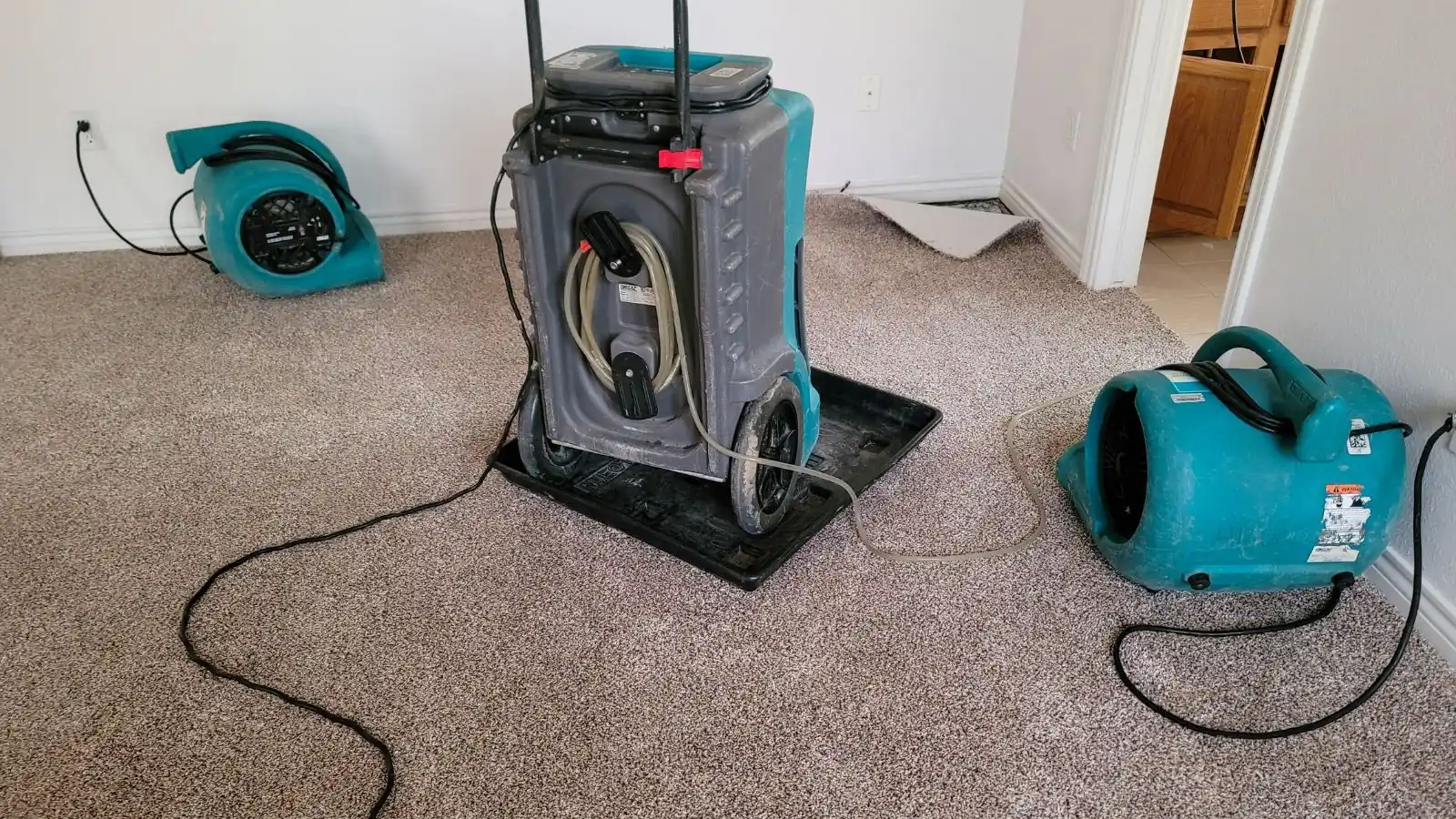
Structural drying and dehumidification is the controlled drying of a building after water has soaked into framing, subfloor, drywall, insulation and concrete. It follows water removal and comes before rebuilding. The goal is not a dry surface. The goal is dry material all the way through.
This page explains the stage itself. If water is still standing, start with water extraction. If the loss was a rising flood, flood damage cleanup covers the full job and this page explains how the drying part works.
Signs your house is still wet inside
You may be here because a floor still feels cool, a baseboard looks fine but smells musty, paint is bubbling, or the air feels heavy days after a leak was fixed. Those are classic signs of moisture trapped inside a wall or under a floor.
A surface that looks dry can hide wet framing and insulation, and a moisture meter is the only way to know. If any of these sound familiar, the sections below explain what drying actually involves.
How drying actually works
Drying is physics. Wet materials give up moisture to the air, and the air can only hold so much. Air movers sweep moist air off surfaces, and dehumidifiers pull that moisture out of the air so the cycle can continue. Without a dehumidifier, fans just push damp air around the house.
Crews follow ANSI/IICRC S500, the industry standard for water damage restoration, which classifies water losses from Class 1 to Class 4 by how much material is wet and how slowly it releases moisture. Class 4 jobs involve dense materials such as hardwood, plaster and concrete and need specialty drying equipment.
Moisture readings and the dry standard
A drying job is guided by numbers. Technicians take readings on affected materials and on similar unaffected materials in the same house to set a dry standard. Daily or regular visits compare today's readings to that standard until the structure reaches it.
Thermal imaging helps find wet spots behind walls, and humidity and temperature readings in the room show whether the dehumidifiers are keeping up. A job without logged readings is a guess. Ask for the log. It also supports your insurance file.
What to do while equipment is running
Leave the equipment on
Do not turn off dehumidifiers or air movers to save noise or power. Stopping early is the most common reason a job fails.
Keep the area closed
Close doors and windows in the drying zone so dry air does not mix with outside humidity.
Do not move or unplug units
Equipment is placed by plan. Tell the crew if a cord is tripping a breaker.
Report new smells or stains
A musty smell or a new stain can mean moisture is moving, which the crew needs to know.
Keep pets and children away
Hoses, cords and hot exhaust from some units are hazards.
Expect visits
Technicians return to log readings and adjust equipment until the structure reaches the dry standard.
Why drying takes several days
Dense materials release moisture slowly. A slab, a subfloor or a thick plaster wall can take days to reach the dry standard even with strong equipment. The exact number depends on the water category, the materials and how long they sat wet, so no honest crew promises a fixed number of days before measuring.
EPA guidance says to dry wet materials within 24 to 48 hours to limit mold, and to keep indoor humidity below 60 percent. If drying takes longer because of the materials, the crew should say so, and it should check for mold risk as the days pass.
Drying in place versus tearing out
Not every wet material gets removed. Clean-water drywall, framing and many hard surfaces can be dried in place with injectors, panels or cavity drying. Contaminated porous materials and badly damaged insulation are usually removed.
Tear-out decisions use the category of water, the time wet and the readings. A cautious crew opens a small inspection hole before cutting large sections. For the repair stage, see wall and drywall water damage repair.
| Class | What it means | Typical drying focus |
|---|---|---|
| Class 1 | Small area, low-porosity materials | Light airflow and dehumidification |
| Class 2 | Whole room of carpet, wet walls up to about 24 inches | Air movers, dehumidifiers and possible cushion removal |
| Class 3 | Water from above, saturated ceilings, walls and insulation | Heavy equipment and tear-out where required |
| Class 4 | Deep saturation in dense materials such as hardwood, plaster or concrete | Specialty drying systems and longer monitoring |
Not sure if your structure is dry?
Call and describe what happened and when. The dispatcher can explain what a moisture check involves.
What affects the cost of structural drying
Drying is priced mostly by equipment and days. These factors set the total.
Area and materials
More wet material and denser materials need more equipment and more days.
Water class and category
Higher classes and contaminated water add equipment and tear-out.
Drying days
Each day of monitoring adds visits and equipment time.
Access to wall cavities and floors
Drilling, injecting and removing baseboards add labor.
Utility load
Dehumidifiers and air movers use electricity, which affects a home's power planning.
Insurance commonly responds to sudden and accidental water and may require drying records, so keep the log. For your own number, call (508) 286-8971 and describe the loss.
Why Middleboro structures hold moisture
The town's state-supported resilience workshop recorded rising groundwater and high water tables, and plumbers and restorers know that a high water table keeps crawl spaces, slabs and cellars damp longer. In wet years the air stays heavy as well. The weather station at Plymouth airport averaged about 48 inches of rain a year from 2000 to 2021, and the wettest year, 2018, topped 60 inches.
That context matters for drying. Open windows do not dry a house in a humid week, so controlled dehumidification is not optional after a real loss. It also means a house should be monitored until readings, not the calendar, say the structure is dry.
Source type: Middleborough community resilience report, state hazard summary of Plymouth airport rainfall
Frequently asked questions
Why does my wall still feel damp after the leak was fixed?
The leak may be fixed while moisture is still inside the wall, the insulation or the framing. A meter can confirm it, and cavity drying or a small opening may be needed before repair.
Can fans alone dry a wet house?
Fans move air but do not remove water vapor from the house. Dehumidifiers are needed, especially in humid weather, and a meter tells you when the structure is dry.
How do I know when drying is finished?
Readings on affected materials match the dry standard set from unaffected materials, and the crew has logged them over the visits. Ask for the log before rebuilding.
Does drying prevent mold?
Quick drying reduces the chance of mold, and EPA guidance is to dry wet materials within 24 to 48 hours. If mold has already formed, see mold remediation.