
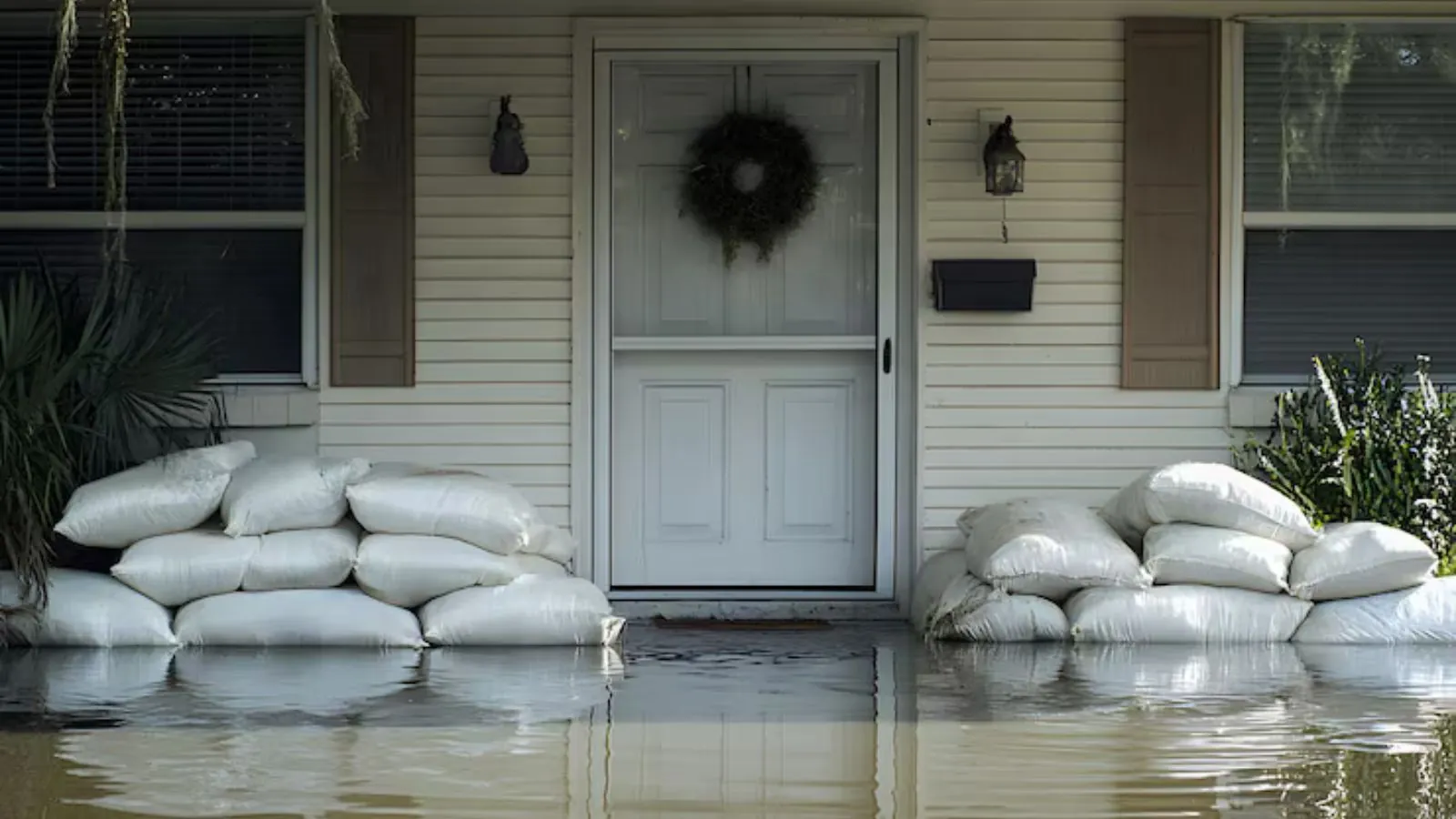
Storm water damage cleanup covers water that enters a home through roofs, windows, doors, siding, basements or yards during heavy rain, wind, snowmelt or ice. It often combines several water sources in one event.
After a storm, the work is triage: stop further entry, remove water and dry. For standing water, see water extraction. For floodwater from rivers or surface runoff, see flood damage cleanup.
When storm damage is an emergency
Storm damage is an emergency when water is still entering, when a roof or window is open to weather or when power lines are down. Wet insulation, ceilings and floors can fail within hours, and secondary damage from wind and rain adds up.
Do not go onto a roof in wet weather. Stay away from downed lines and report them to the utility. Temporary protection such as a tarp can be arranged, and your insurer may require it.
What storms do to homes
Wind-driven rain pushes water under shingles, around windows and through flashing. Heavy rain overwhelms gutters, and downspouts dump water against the foundation. Ice dams in winter back water under roof edges.
After a storm, check ceilings, upper walls, attic spaces, basement walls and window sills. A stain that appears days after a storm can still be storm damage. ANSI/IICRC S500 treats water that crossed the ground as contaminated, which is why storm runoff is handled differently from rain through a roof.
Temporary protection
Stopping further damage comes first. A tarp over a roof breach, plywood over a broken window and plastic over openings reduce the amount of water that gets in. Keep receipts, since many policies reimburse reasonable protection costs.
Roof repair belongs to a roofer. A restoration crew can tarp, extract and dry, and coordinate with your insurer's requirements.
What to do after a storm
Stay safe
Keep away from downed lines and unstable trees or structures.
Stop more water
Move belongings away from leaks and tarp what you safely can.
Cut power to wet areas
Only if the panel is dry. Otherwise call the utility.
Photograph damage
Take wide and close photos of the roof, ceilings and floors.
Check the basement
Look for water at the walls and around the sump.
Call your insurer and the 24/7 line
Report the loss and get a crew on the way.
Drying after a storm
The crew checks the attic, ceilings, walls and floors with moisture meters, removes wet insulation, extracts standing water and dries the structure. Storm water that came across the ground is treated as contaminated, and that changes what is removed.
Keep a record of the storm date, photos and any weather reports. They help your claim.
| Entry point | Sign | Action |
|---|---|---|
| Roof or flashing | Ceiling stains | Temporary tarp, then roof repair |
| Windows and doors | Wet sills and floors | Seal and dry |
| Gutters and downspouts | Water at the foundation | Clear and redirect |
| Basement walls | Seepage | Extract and dry |
| Attic vents | Wet insulation | Remove and dry |
Storm water coming in?
Call and describe where the water is entering. The dispatcher will give you safe steps.
What affects storm cleanup cost
Storm losses vary a lot. These factors apply.
Entry point
Roof breaches add temporary protection.
Water category
Surface water adds disposal and cleaning.
Area affected
More rooms mean more drying.
Materials
Insulation, ceilings and floors add tear-out.
Timing
Quick response limits secondary damage.
Insurance usually treats wind-driven rain differently from flood. Wind damage is often covered and flood is often excluded. Check your policy and ask your insurer. For your own scope, call (508) 286-8971.
Storms, culverts and catch basins in Middleboro
The town's resilience report lists culverts at Summer Street, Thomas Street and Plymouth Street as places where water backs up, and names Vernon Street bridges and Route 44 and Route 495 drainage in the same risk discussion. It also notes limited catch basin capacity, including a basin at Route 44 and Plymouth Street.
Plymouth airport recorded about 48 inches of rain a year on average from 2000 to 2021, with 2018 the wettest year at roughly 61 inches. After a storm, check where water goes around your property, since a blocked culvert nearby can send water your way.
Source type: Middleborough community resilience report, state hazard summary of Plymouth airport rainfall
Frequently asked questions
Do you handle storm water damage emergencies at night or on weekends in Middleboro?
Yes. Storms do not respect business hours, so the line is open 24/7 and same-day response is offered when available. Tell the dispatcher where water is entering and whether any lines are down.
Is storm water damage covered by homeowners insurance?
Wind-driven rain through a storm-damaged opening is often covered while flood is often excluded. Read your policy and ask your insurer.
Do you tarp roofs?
Temporary protection can be arranged. Permanent roof repair belongs to a roofer.
How soon do I need to call?
Right away. Wet insulation and ceilings degrade quickly.
What if my basement flooded in the storm?
See basement water damage cleanup for that situation.