
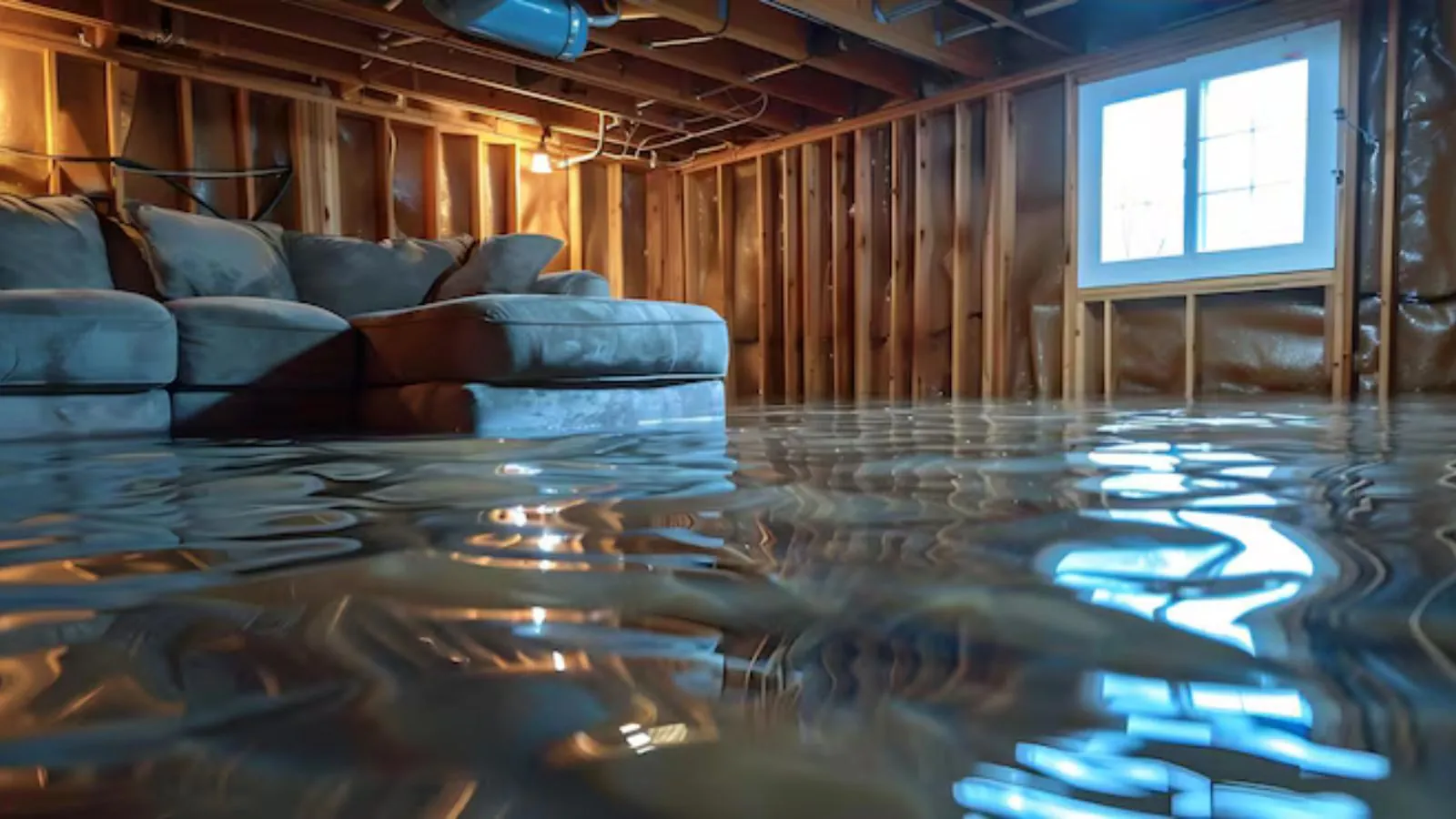
Crawl space water damage covers standing water, wet insulation, soaked vapor barriers and damp framing under a house. Water gets in from groundwater, roof runoff, plumbing leaks, appliance drains or poor grading.
A wet crawl space is hard to dry and easy to ignore, and the moisture rises into the floor above. If floors above feel cold or cup, see hardwood floor water damage repair.
Why crawl spaces get wet
Rain can run toward a foundation if gutters, downspouts or grading are poor. High groundwater can seep through block walls or dirt floors. Plumbing leaks drip onto the ground, and a failed sump or pump leaves standing water.
A damp crawl space does not stay in the crawl space. Humid air rises through gaps and into the home, which adds to mold risk and makes floors feel cold and soft. ANSI/IICRC S500 guidance on drying and EPA guidance on keeping humidity below 60 percent are the two references that matter for a damp crawl space.
What restoration does and does not do
A restoration crew removes standing water, takes out wet insulation, dries the framing and subfloor with dehumidifiers and checks for mold. Cleaning and antimicrobial treatment follow where needed.
Restoration is not encapsulation. A crew dries and cleans what was damaged. A vapor barrier, new drainage or a sump system is a separate job from a waterproofing contractor, and a recurring wet crawl space needs one.
What to check from the hatch
Look for standing water
Use a flashlight and note depth, color and any smell.
Check for plumbing leaks
Dripping pipes or a running line are easy to see from the hatch.
Do not enter wet space
Wiring and slippery soil are hazards.
Check the gutters and downspouts
Make sure roof runoff drains away from the foundation.
Photograph what you see
Capture water, insulation and framing.
Call a crew
Describe what you see so the dispatcher can plan equipment.
Safety in tight spaces
Crawl spaces are cramped, dark and can hide wiring and ductwork. Do not enter standing water, since a wet space with exposed wires is a shock risk. Mold, rodent droppings and low oxygen are other reasons to leave work to trained crews.
If you need to look, use a flashlight from the access hatch. Check for standing water, sagging insulation and damp soil.
| Source | Clue | Fix |
|---|---|---|
| Groundwater | Water after heavy rain | Drainage or sump, then drying |
| Roof runoff | Water near gutters | Extend downspouts, grade soil |
| Plumbing leak | Water under a bathroom or kitchen | Plumber, then drying |
| Appliance drain | Water under a laundry or HVAC | Fix the drain, dry |
| Condensation | Damp, humid air | Vapor barrier and ventilation work |
What affects crawl space cleanup cost
Cost depends on access and extent. These factors apply.
Access
Tight hatches add labor.
Insulation
Wet insulation must be removed and replaced.
Water depth
More water means more pumping.
Mold
Visible mold adds remediation.
Prevention work
Vapor barriers and drainage are separate jobs.
Insurance rarely covers groundwater seepage or poor drainage, but sudden plumbing leaks may be covered. Check your policy and ask your insurer. For your own scope, call (508) 286-8971.
High groundwater and low ground in Middleboro
Middleboro's resilience workshop recorded rising groundwater and high water tables, and the town sits between the Taunton River and Buzzards Bay watersheds, with the Great Cedar Swamp and Little Cedar Swamp nearby. The report describes water tables that limit infiltration, so crawl spaces and cellars in low areas can stay damp longer after storms.
If your crawl space has a dirt floor, a plastic vapor barrier and good drainage are the long-term fixes. Restoration handles the short-term mess.
Source type: Middleborough community resilience report
Frequently asked questions
Is a damp crawl space an emergency?
Standing water is urgent. Mild dampness is a problem to fix, but not a middle-of-the-night call.
Can I dry my crawl space with a household dehumidifier?
A small unit helps with mild humidity but not with standing water. Use pumps first, then dehumidification.
Does wet insulation have to go?
Fiberglass that stayed wet or sagged usually has to be removed. It holds moisture against framing.
Can mold grow under my house?
Yes if the space stays damp. See mold remediation for how containment works.