
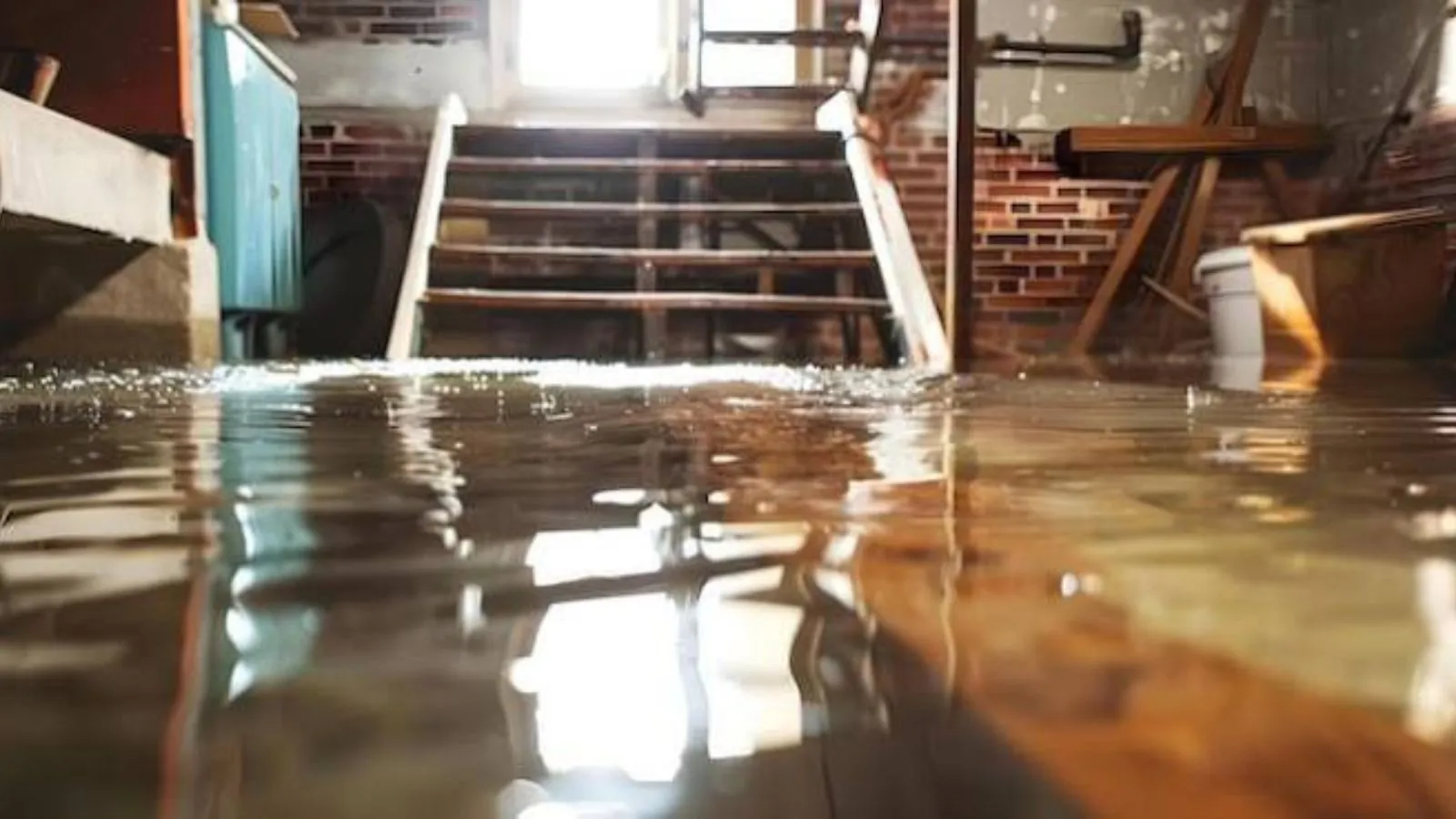
Flood damage restoration in Middleboro starts with one question: where did the water come from? Water that has crossed the ground, whether from a river, a pond or a storm drain, is treated as contaminated, and it is handled differently from a clean supply line break.
Crews remove the water, take out what cannot be saved, sanitize what stays and dry the structure until readings match unaffected material. This page covers rising and surface flooding. A flooded cellar has its own page on basement water damage, and a plumbing failure is covered under burst pipe water damage.
When floodwater in your home is an emergency
Treat any flood as urgent once water reaches finished flooring, insulation or electrical gear. One inch of water across 1,000 square feet is about 623 gallons and more than 5,000 pounds, which is why even a shallow flood can lift laminate, soak the base of drywall and load a subfloor. Wet materials left alone also give mold a place to start, and federal guidance from the EPA says to dry them within 24 to 48 hours.
Safety comes before cleanup. Floodwater can carry sewage, fuel and soil, and it can energize a wet outlet or a plugged-in cord. If water is above the outlets, if you smell gas or if the panel is wet, stay out and call the utility or 911 before you call a restoration line. Never run a generator indoors or in an attached garage.
What floodwater does that clean water does not
The industry standard for water loss, ANSI/IICRC S500, sorts water into three categories. Category 1 comes from a sanitary source such as a supply line. Category 2 carries some contamination. Category 3 is grossly contaminated and includes rising floodwater and sewage. River, pond and surface flooding is handled as Category 3 from the start.
That label changes the work. Porous materials that soaked up Category 3 water, such as carpet, cushion, insulation and the lower stretch of drywall, are normally removed and discarded instead of dried. Hard surfaces and framing are cleaned, treated and dried. You can ask any company whether its crews follow S500, and a good one will explain how the category affects your scope.
How a flood job is run, in order
A typical flood job follows a set order. First comes water removal with submersible pumps and extraction units, then a controlled tear-out of wet drywall, insulation and flooring, usually cut a measured height above the waterline. Surfaces get cleaned and treated with an antimicrobial, and then air movers and dehumidifiers dry the framing and slab.
Moisture meters and thermal imaging tell the crew whether the structure is drying or only looks dry. Readings are logged on each visit until they match the dry standard set from unaffected materials. Only then does rebuilding begin. Where studs stayed wet for days, structural drying and dehumidification explains how that stage works.
Before the crew arrives
Stay out of the water
Keep children, pets and anyone unsteady away from standing water until the source and the electrical risk are clear.
Cut power only if it is safe
Turn off breakers for wet areas only if the panel is dry and you can reach it without stepping in water. Otherwise call the utility.
Photograph before you move things
Take wide shots and close-ups of the water line, damaged items and appliances. Date-stamped photos help your claim.
Lift what you can
Raise small furniture, rugs, electronics and paperwork onto dry shelves. Do not strain to move heavy pieces.
Do not use household vacuums
A standard vacuum on wet floors is a shock risk and spreads contamination through the machine.
Call the 24/7 line
Tell the dispatcher where the water came from, how deep it is and whether power is still on in the area.
Flood losses and your insurance policy
Insurance treats floods differently from sudden plumbing failures. Standard homeowners policies commonly exclude flood damage, and flood coverage is often a separate policy, including National Flood Insurance Program coverage. Read your policy, ask your insurer which cause of loss applies and tell them early that you are documenting the damage.
Take wide and close photos before anything is moved, keep a list of discarded items and save receipts for emergency work. A restoration crew can write down what was removed and why, which helps an adjuster follow the claim. Nobody can promise a claim will be approved, and this page does not give coverage advice.
River-country homes in the north of town are covered on the North Middleboro and Titicut page.
| Water source | Typical category | Usual handling |
|---|---|---|
| Rising river or pond | Category 3 | Remove water, discard porous materials, clean and treat, then dry |
| Surface runoff or storm drain overflow | Category 3 | Same as above, with extra attention to the lowest rooms |
| Groundwater through slab or walls | Category 2 or 3 | Extract, check for contamination and discard soaked porous finishes |
| Rain through a failed roof | Category 1 to 2 | Dry in place where possible and remove insulation that stayed saturated |
| Sewer backup | Category 3 | Treat as a sewage loss, see sewage backup cleanup |
Standing water in the house right now?
Describe what you see to the dispatcher and ask what to do before anyone arrives. The line is open all day and all night.
What affects the cost of flood cleanup
Every flood is priced from its own scope, and no honest number can be quoted before someone looks. These are the factors that move the total most.
Water category
Category 3 water means more material is removed and discarded, and more cleaning is needed.
Area and depth
A few rooms with shallow water cost far less than a whole level that sat in water.
Materials affected
Finished flooring, cabinets and drywall add tear-out and rebuild work compared with bare slab or concrete.
Drying days and equipment
Heavy framing and slabs hold water, so the number of air movers and dehumidifiers and the days they run matter.
Rebuild scope
Restoring flooring, drywall and paint is separate from water removal and is priced separately.
Insurers often cover sudden and accidental water damage and usually exclude flood unless you carry flood coverage, so check your policy first. Want a real number for your home? Call (508) 286-8971 and describe the loss.
Flood exposure around Middleboro
Middleboro sits in two watersheds, the Taunton River basin to the north and Buzzards Bay to the south, and the town's own state-funded resilience workshop names the 2010 flood as the most significant event in recent memory. That report also describes silt and sandbars in the Nemasket River and lists several dams, including the Wareham Street dam, the Plymouth Street dam and the Stony Brook dam.
The federal flood declarations that included Plymouth County include March 2010, according to a neighboring town's hazard mitigation plan. For you, the practical step is to look up your address on the FEMA flood map and ask the Middleborough Building Department whether it falls inside the floodplain overlay district, because rebuilding there needs a permit.
Source type: Middleborough community resilience report, Middleborough floodplain bylaw on eCode360, FEMA declaration list in a Plymouth County hazard mitigation plan
Frequently asked questions
Do you handle flood damage cleanup emergencies at night or on weekends in Middleboro?
Yes. Flooding does not wait for business hours, so the line is answered 24/7 including nights, weekends and holidays. Same-day response is offered when available, and the dispatcher will tell you what to do with the power, the water and your belongings while a crew is arranged.
Does homeowners insurance cover flood damage in Middleboro?
Standard homeowners policies often exclude flood, and flood coverage is usually a separate policy. Your policy wording decides, so ask your insurer how they classify your loss before you sign anything.
How long does a flooded Middleboro home take to dry?
Flooded structures usually need several days of drying, and the exact number depends on the water category, the materials and the readings, so a crew gives a plan after measuring instead of a fixed number.
Can I keep my carpet after a flood?
Carpet and cushion that sat in contaminated floodwater are normally removed. Carpet that only got clean water and is dried quickly is sometimes saved. See carpet water damage restoration for the difference.
Is this the same service as basement water cleanup?
They overlap but the focus differs. Flood pages cover rising and surface water through the whole house, while basement water damage covers the below-grade room, sump failures and finished lower levels.