
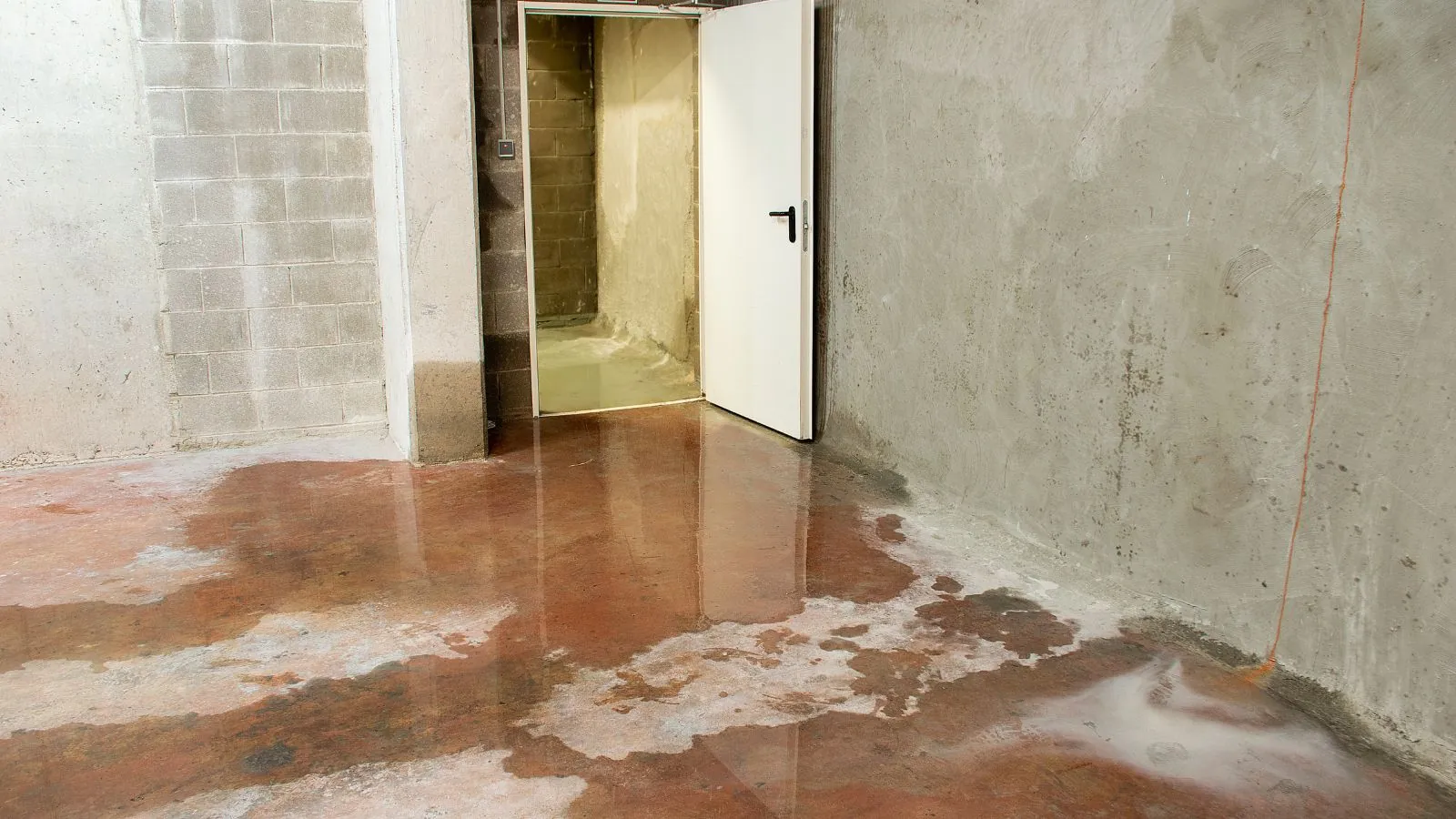
Slab leak water damage covers leaks in water supply lines buried in or under a concrete slab. The water can lift flooring, soak the slab and spread under walls. The leak itself is a plumber's repair, and the water damage is a restoration job.
Slab leaks are most common in slab-on-grade homes, additions and garages, where supply lines run in or under the concrete. For general pipe bursts, see burst pipe water damage.
Signs you may have a slab leak
You may be here because a floor feels warm in one spot, the water meter spins when everything is off, you hear running water in the walls or your water bill jumped. Those are classic signs of a leak under the slab.
Shut off the main and watch the meter. If it stops, the leak is on the house side. The sections below explain what comes next.
When a slab leak is an emergency
A slab leak is an emergency when water is visible on the floor, when the floor buckles or when the main has to stay off to stop the loss. A pressurized line under a slab can run for days, soaking carpet and the soil under the foundation.
Shut off the main to stop the water. Turn off breakers for wet areas only from a dry spot. Keep rugs and furniture off the floor, and call a plumber who uses leak detection equipment to locate the break.
How slab leaks are found
Plumbers use acoustic listening devices, thermal imaging and pressure tests to find a slab leak without breaking concrete everywhere. Once found, repair options include breaking into the slab, rerouting the line through walls or lining the pipe.
A restoration crew does not find the leak. We dry what water has reached after the plumber has stopped it, using moisture meters across the slab and the walls. ANSI/IICRC S500 describes concrete as a dense material that releases moisture slowly, which is why slab drying is measured and not guessed.
Drying a wet slab
Concrete holds water and releases it slowly. A wet slab under flooring needs dehumidifiers and sometimes drilling or specialty mats to dry. Flooring on top, especially hardwood, laminate and glued carpet, may need to be removed to let the slab breathe.
Drying takes days, and moisture readings tell the crew when it is done. Building over a wet slab leads to mold and floor failure.
What to do if you suspect a slab leak
Shut off the main
Close it, then watch the meter to see if it keeps moving.
Check for warm spots
Warm patches on the floor suggest a hot water line.
Listen
Hissing or running sounds with fixtures off are a clue.
Move belongings
Lift furniture and rugs off wet or warm areas.
Call a leak detection plumber
Describe what you found.
Call the 24/7 line
Plan drying once the leak is stopped.
Hidden damage in walls and foundations
Water under a slab can wick into the base of walls and into soil around the footing. Check baseboards, drywall and cabinet bases near the leak for moisture. A crew can map the wet area with a thermal camera.
Ask your plumber and your insurer about repairs to the slab itself. Foundation repairs are a separate field.
| Sign | Suggests | Next step |
|---|---|---|
| Warm floor spot | Hot line leak | Plumber with leak detection |
| Water meter spinning with fixtures off | Leak on the house side | Shut main and call plumber |
| Hissing in the walls | Pressurized line | Shut main |
| High water bill | Hidden leak | Check meter and call plumber |
| Cracked flooring | Moisture pressure | Dry and check the slab |
Think you have a slab leak?
Shut the main, then call and describe what you heard, felt or measured.
What affects slab leak damage cost
Slab leak damage depends on how long it ran. The main factors are:
Duration
A long leak soaks more concrete and soil.
Flooring
Hardwood and glued carpet must be removed.
Walls
Water at the base of walls adds drywall work.
Plumbing repair
Rerouting or breaking the slab is a separate bill.
Drying days
Concrete dries slowly.
Insurance may cover resulting water damage and may exclude the cost of reaching the pipe, so policies vary. Check yours and ask your insurer. For your own scope, call (508) 286-8971.
Slab leaks in Middleboro
Most Middleboro homes are served by the town water system, public water supply 4182000, with the East Main Street plant and the East Grove Street facility, and some use private wells. The resilience report notes that a few mains, including Wareham Street and East Grove Street, have few redundancies, so a hidden leak on your side of the meter is worth finding early.
Ask your water department to check your meter if you suspect a leak. A running meter with all fixtures off is a clear sign.
Source type: Middleborough community resilience report
Frequently asked questions
Do you handle slab leak water damage emergencies at night or on weekends in Middleboro?
Yes. A slab leak runs around the clock, so the line is open 24/7 and same-day response is offered when available. Tell the dispatcher whether the main is off and whether a plumber has located the break.
My floor feels warm. Is that a slab leak?
It can be a hot water line leaking under the slab, or radiant heat. Shut off the main and watch the meter to find out.
Can restoration fix the leak?
No. A plumber finds and repairs the leak. We dry the damage afterward.
Why is my water bill so high?
A hidden leak is one cause. Check the meter with fixtures off. A moving dial means a leak.
Will the floor have to come up?
Often yes for hardwood and glued flooring. The slab needs to dry before new flooring goes down.