
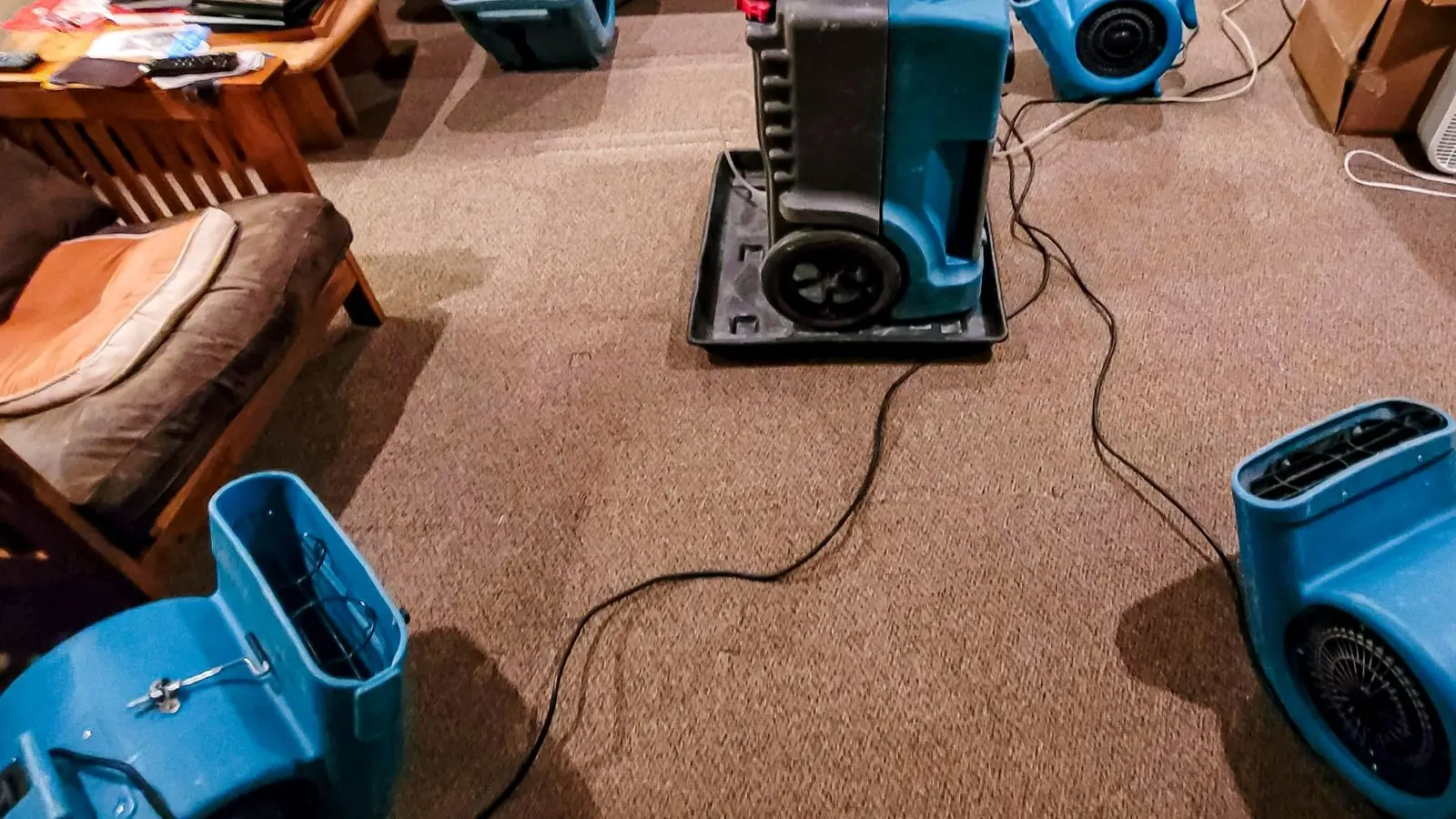
Carpet water damage restoration covers wall-to-wall carpet, area rugs and padding after a leak, spill, flood or overflow. The carpet is only one layer. Beneath it sit the pad, the tack strips and the subfloor, and each one reacts to water differently.
The decision to save or replace carpet is driven by the water source, the time it stayed wet and the condition of the pad. If the water was contaminated, see sewage backup cleanup. For standing water, start with water extraction.
Save or replace? How crews decide
The industry standard for water damage, ANSI/IICRC S500, calls water from clean sources Category 1, water with some contamination Category 2 and floodwater or sewage Category 3. Carpet that got Category 1 water and is dried quickly can often be saved. Carpet that soaked in Category 3 water is generally discarded because it cannot be cleaned reliably.
Time matters just as much. Carpet that stays wet for 48 hours or more becomes a mold risk, and EPA guidance says to dry wet materials within 24 to 48 hours. A crew will test the carpet, the pad and the subfloor before promising anything.
What happens to the padding
Padding acts like a sponge. It holds water long after the surface feels dry, and it is hard to clean. Many jobs replace the pad even when the carpet is saved, because new pad is inexpensive relative to the cost of mold or odor later.
To dry carpet in place, crews lift a corner, pull back the carpet, remove the wet pad and float the carpet on air movers. The subfloor gets dried underneath, and the carpet is stretched back once the readings are good.
What to do while carpet is wet
Stop the water
Shut off the source and remove standing water as fast as you safely can.
Lift furniture
Move furniture off wet carpet. Place foil or plastic blocks under legs that stay.
Remove small items
Take books, shoes, electronics and boxes off the floor.
Do not walk on it
Walking spreads moisture and compresses the pad. Use boards or towels as a path if you must cross.
Run air flow
Open a window in dry weather or run a fan, and use a dehumidifier if you have one.
Check the source of the water
Clean water gives you more options. If it was from outside, a drain or a toilet, tell the dispatcher.
Cleaning, sanitizing and deodorizing
Once carpet is dry, it is cleaned with hot-water extraction and treated with an antimicrobial where appropriate. Odors from pet accidents, sewage or smoke need targeted treatment, not just a surface spray.
If an odor lingers weeks later, the cause is usually moisture in the pad or subfloor, not the carpet fibers. A moisture meter finds it. A deodorizing treatment over wet material only masks the problem.
Area rugs and specialty flooring
Wool and silk rugs, antique pieces and rugs with natural backings need different handling and often go to a specialty cleaner. If you have valuable rugs, lift them off wet floors right away and tell the crew about them.
| Water source | Can carpet be saved? | Pad |
|---|---|---|
| Clean supply line or appliance leak | Often, if dried quickly | Often replaced |
| Rain through a roof or window | Sometimes | Often replaced |
| Groundwater or surface flood | Usually not | Replaced |
| Sewage | No | Replaced |
| Dishwasher or washer overflow | Often, depending on soap and time | Often replaced |
Is your carpet wet right now?
Call and tell the dispatcher what the water came from and how long it has been wet.
What affects carpet restoration cost
Carpet work ranges from extraction only to full replacement. The main cost factors are below.
Water category
Contaminated water leads to replacement, which adds disposal and new materials.
Square footage
More carpet means more extraction, drying and replacement.
Padding and tack strips
Pad replacement is common, and tack strips may need replacing as well.
Subfloor condition
A wet subfloor adds drying and sometimes sealing.
Carpet quality
Higher-grade carpet costs more to replace and may justify drying in place.
Insurance often covers sudden water damage to carpet, and sewage or flood coverage may differ. Check your policy and keep samples. For your own scope, call (508) 286-8971.
Carpet in Middleboro homes near bogs and low ground
Middleboro has about 1,400 acres of cranberry bogs, according to the town's resilience report, concentrated in the southeast toward the Carver line, and the report notes culverts and flumes that move water under local roads. Homes near bogs and low ground often see higher water tables in wet seasons, which can push moisture into finished lower levels and carpeted rooms.
If you have carpet in a lower level, check the edges and corners after heavy rain, since damp tack strips and baseboards show early. Catching a slow seep early can mean drying instead of replacing.
Source type: Middleborough community resilience report
Frequently asked questions
How long can carpet stay wet before it has to be thrown out?
Carpet wet for more than about 48 hours is at a higher mold risk, and contaminated water leads to replacement at any time. A quick check by a technician is the safest way to know.
Do I have to replace the pad?
Often yes. Pads absorb water and are hard to clean. Replacing pad is usually inexpensive compared with the risk of mold or odor.
Can I rent a carpet cleaner to fix it?
A rental machine can help with a small clean-water spill, but it will not dry a soaked pad or a subfloor. For a real water loss, professional extraction and air movers are better.
Is wet carpet a mold risk?
It can be if it stays wet. Dry it fast, and if you see or smell mold, see mold remediation.