
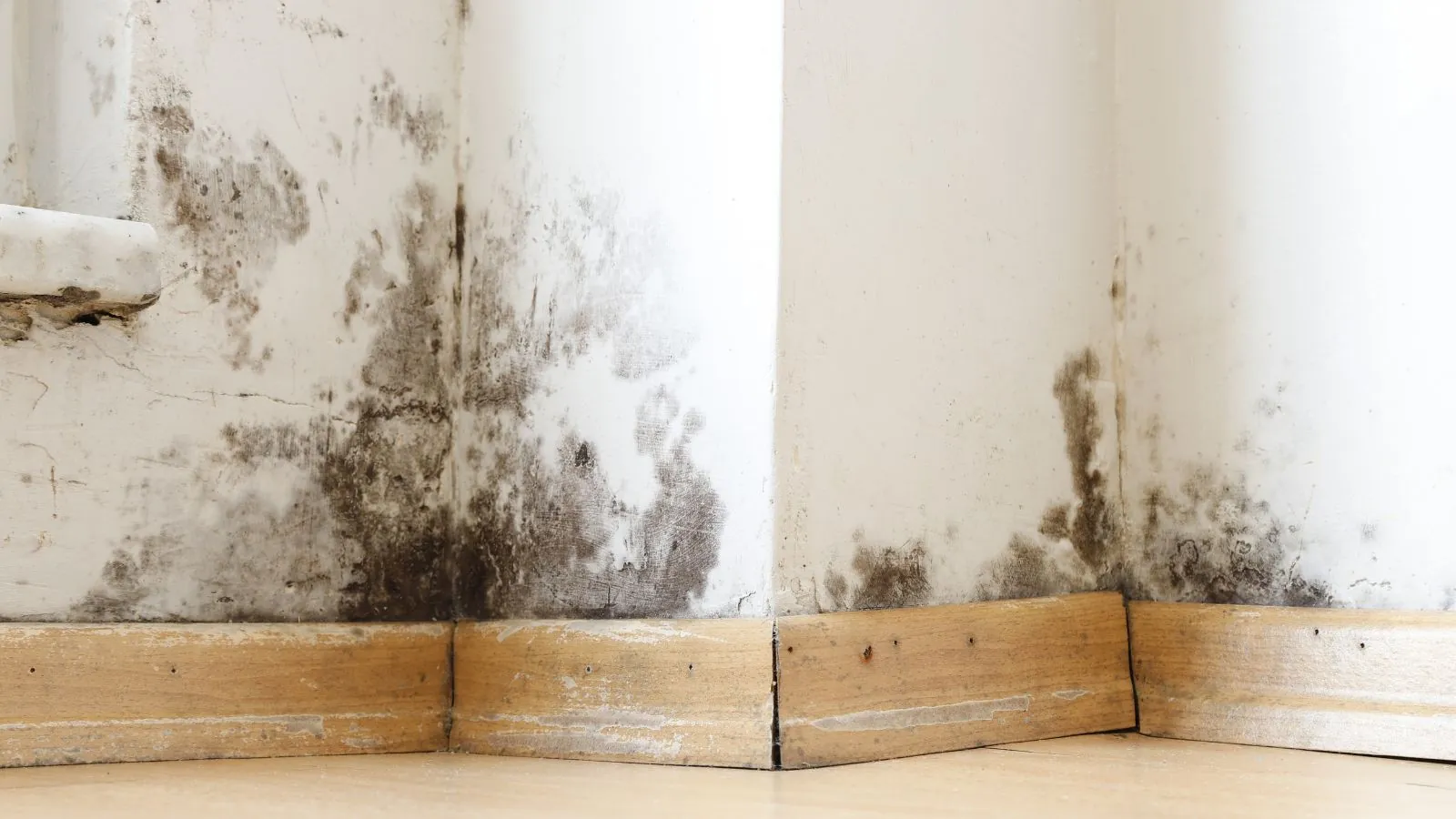
Mold remediation is the process of containing, removing and cleaning mold growth, then fixing the moisture that caused it. It is not a spray treatment. The industry guidance, ANSI/IICRC S520, sorts mold conditions into three groups: normal fungal ecology (Condition 1), settled spores (Condition 2) and active growth (Condition 3).
Water damage and mold go together. If your house was wet and not dried within 24 to 48 hours, mold can start. For drying, see structural drying and dehumidification.
Signs you may have mold
You may be here because of a musty smell, black or green spots on a wall, bubbling paint or allergy symptoms that get worse at home. Those can be signs of hidden mold behind a wall or under a floor.
A moisture source is almost always involved. The sections below explain what remediation looks like and what to do first.
How remediation works
A remediation job follows a set order. The crew finds and fixes the moisture source, sets up containment with plastic barriers and negative air, removes contaminated porous materials, cleans salvageable surfaces and dries the area. Air scrubbers capture spores during the work.
Containment keeps spores from spreading to clean rooms. Workers wear protective gear, and bagged debris is removed. After cleaning, the area is dried and checked to see whether it meets the clearance standard.
What not to do
Do not spray bleach on mold and call it done. Bleach does not penetrate porous materials, and the moisture remains. Do not disturb a large patch with a dry brush or a fan, since that spreads spores. Do not paint over mold.
Small patches under about 10 square feet on hard surfaces can be cleaned by a homeowner using the EPA guidance. Larger areas, hidden mold and any mold after sewage or floodwater call for professionals.
What to do if you find mold
Find the moisture
Look for leaks, condensation or flooding that feeds the mold.
Fix the source
A plumber or roofer fixes the leak. Remediation does not work if the source remains.
Do not disturb it
Avoid dry brushing or fans that spread spores.
Limit exposure
Keep children, pets and anyone with breathing problems away.
Photograph it
Capture the growth and the moisture clues.
Call for an assessment
Describe the size, the location and the water history.
Testing and clearance
Testing can help in some cases, but it is not required by default. Many experts say a visual inspection and moisture readings matter more than spore counts. If a test is needed, an independent assessor, not the remediation company, should do it to avoid a conflict of interest.
After remediation, clearance means the area is visibly clean, dry and free of odors. Ask for a written scope and ask who does clearance.
| Condition | Meaning | Typical response |
|---|---|---|
| Condition 1 | Normal fungal ecology | No action |
| Condition 2 | Settled spores from a nearby source | Cleaning |
| Condition 3 | Active growth | Remediation with containment |
What affects mold remediation cost
Remediation is scoped to the problem. These factors count.
Area affected
Larger areas need more containment and removal.
Materials
Drywall, insulation and flooring are discarded.
Containment
Plastic barriers and air scrubbers add equipment.
Moisture source
The repair of the source is separate.
Testing
Independent assessment is a separate cost.
Many homeowners policies limit or exclude mold unless it came from a covered water loss. Check your policy and ask your insurer. For your own scope, call (508) 286-8971.
Damp seasons and wet ground in Middleboro
Middleboro averages about 48 inches of rain a year at the Plymouth airport station, and the town's resilience report records rising groundwater and high water tables. Great Cedar Swamp, Little Cedar Swamp and about 1,400 acres of cranberry bogs shape a landscape where moisture lingers.
Basements, crawl spaces and north-facing rooms are the usual mold spots. Control humidity under 60 percent, according to EPA guidance, and fix leaks quickly.
Source type: Middleborough community resilience report, state hazard summary of Plymouth airport rainfall
Frequently asked questions
How do I know the smell is mold?
A musty odor with a history of water or damp walls suggests mold. A moisture meter and inspection can confirm it.
Can I remove mold myself?
Small patches on hard surfaces, yes, following EPA guidance. Larger areas or hidden mold need a professional.
Will bleach kill mold?
It can lighten stains on hard surfaces, but it does not solve porous material or the moisture source.
Does insurance cover mold?
Often only when it follows a covered water loss, and limits apply. Read your policy.