
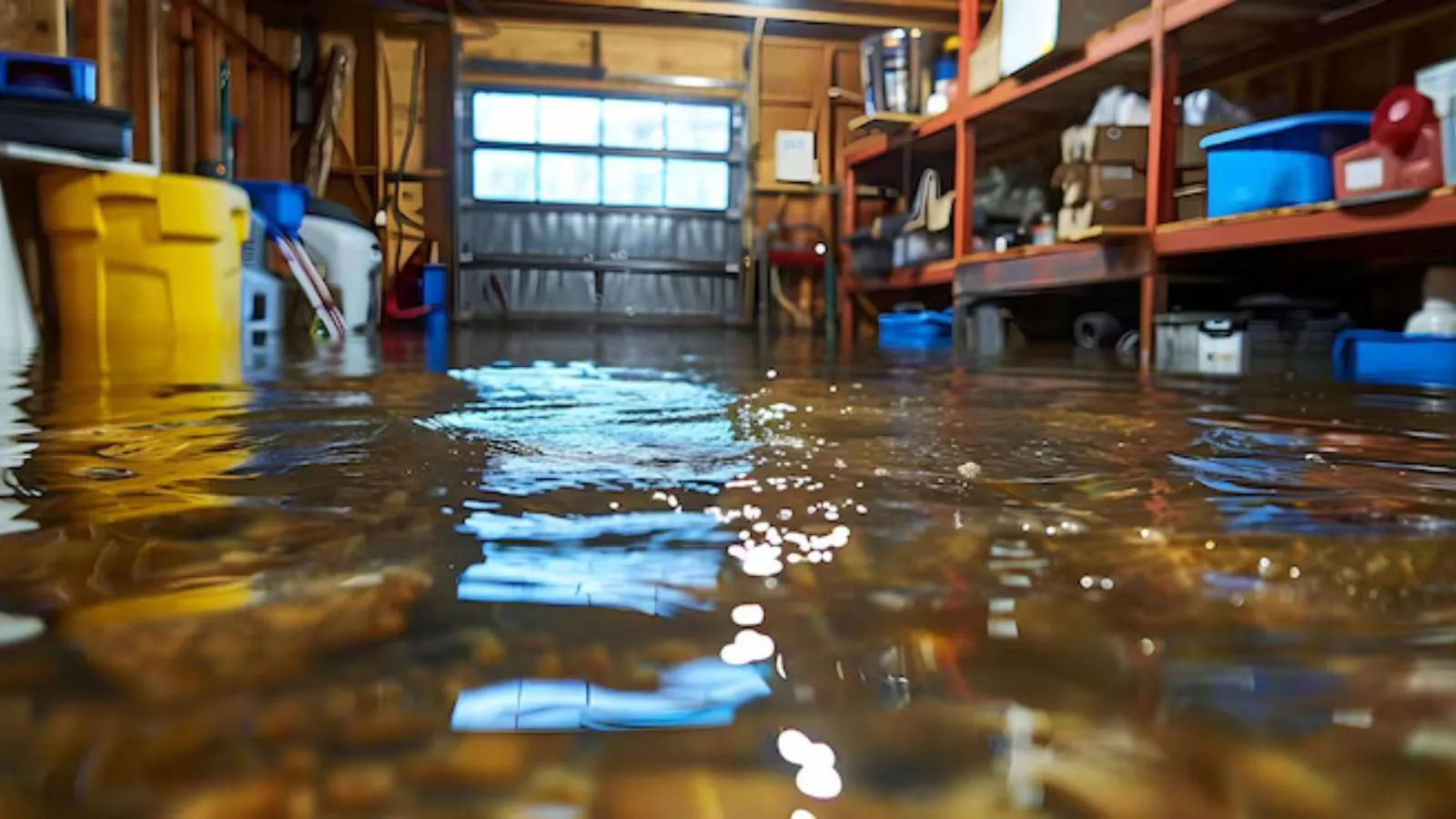
Commercial water damage restoration in Middleboro covers retail units, offices, restaurants, warehouses, medical suites and multi-unit buildings. The difference from a house is scale and downtime. A small leak above a ceiling grid can reach a dozen tenants, and a business cannot reopen until the space is dry and safe.
This page is for buildings used for business. Homeowners should start with water extraction or the page that matches the source of the water. If sewage is involved, sewage backup cleanup applies, with extra safety steps.
When a commercial water loss is an emergency
Call at once if water is reaching electrical panels, server rooms, refrigeration, inventory or a shared wall with another tenant. Water in a commercial space also triggers decisions that a house does not face, such as whether to close for the day, whether to notify the landlord or property manager and whether a lease or insurance policy sets a notice deadline.
Safety first. If water touches electrical equipment, call the utility or 911 before anything else, and do not let staff wade through standing water. Sprinkler or fire-protection leaks should be reported to whoever maintains the system, since those lines are tested and repaired by licensed fire-protection contractors.
What changes in a business building
Commercial buildings have bigger floor plates, suspended ceilings, carpet tile, slab floors, partition walls and shared mechanical systems. Water moves through ceiling grids and wall bases quickly, so crews map moisture across several rooms and sometimes several tenant spaces before deciding where to place drying equipment.
Drying a large slab or a long hallway takes more equipment than a house room, and powering that equipment is a planning job of its own. Crews size dehumidifiers and air movers to the space and the water class, and they follow ANSI/IICRC S500 so the drying plan can be explained to a landlord or an adjuster.
Keeping a business running during restoration
Many Middleboro businesses along Route 28, the Wareham Street corridor and the village center cannot close for long. A good plan works in phases. The crew extracts water first, isolates the worst rooms, restores power safely and tells you which parts of the space can stay open while drying continues.
Ask for a written scope that lists rooms, equipment and expected monitoring visits, and ask how noise, hoses and power use will affect customers. For shared walls and tenant spaces, written notice to the neighboring tenant and the property manager often saves arguments later.
First steps for a business owner
Stop the source
Close the nearest shutoff, or have the building engineer do it. If it is a roof or upstairs unit leak, document the entry point.
Protect people and power
Keep staff out of wet areas with electrical equipment. Switch off breakers only if the panel is dry and reachable.
Protect inventory and records
Move boxes, paper files and stock off the floor to shelves, tables or carts. Cover items under dripping ceilings with plastic.
Photograph everything
Take dated photos of damage, the source and anything you move. Note the time you found the problem.
Notify the right people
Contact the property manager or landlord and your insurance agent. Ask both about notice requirements.
Call the 24/7 line
Describe the building type, the area affected and whether other tenants are involved.
Documentation for the policy and the landlord
Business losses involve more paperwork than a home. Commercial property policies, lease terms and tenant improvement clauses all affect who pays for what, and some policies include business interruption coverage that has its own proof requirements.
Keep dated photos, an inventory list with values, repair invoices and a moisture log from the crew. Restoration records help an adjuster see what was wet and when. Nobody can promise coverage, so read the policy and ask your insurer, your agent and your landlord what applies.
| Item | Often handled by | Why it matters |
|---|---|---|
| Stopping a roof or common-area leak | Landlord or building engineer | The source may sit outside your space |
| Drying your own tenant space | Restoration crew you hire or the landlord's vendor | Reading logs support any later claim |
| Inventory and equipment losses | Your business policy | Keep photos, lists and receipts |
| Fire sprinkler or alarm lines | Licensed fire-protection contractor | Do not repair these yourself |
| Downtime and lost income | Business interruption coverage, if you have it | Policies set their own proof rules |
Is your business space wet?
Call and tell the dispatcher the building type and how many rooms are affected. They will go through the first steps while a crew is arranged.
What affects the cost of a commercial water loss
Commercial scopes vary widely. These factors move the total most.
Floor area and tenant count
Larger floor plates and several affected tenants add equipment and monitoring visits.
Ceiling and wall construction
Suspended ceilings, insulation and partition walls change how much is opened and replaced.
Contents and inventory
Moving, protecting or disposing of stock and equipment adds labor.
After-hours work
Working around business hours can add scheduling and equipment time.
Rebuild and finishes
Carpet tile, ceilings and paint are separate from water removal and drying.
Commercial property policies differ widely, and many exclude flood while covering sudden plumbing failures. Check your policy and talk to your agent. For a scope and price based on your space, call (508) 286-8971.
Commercial buildings in Middleboro
The town's own resilience report lists municipal buildings and sites as flood-risk assets, including the library, Pratt Farm, Oliver Mill Park and the Oliver House. That tells owners in the center of town that low ground near the Nemasket River needs attention, and it shows why drainage on Route 44 and Route 495 and limited catch basin capacity come up in the same report.
If your space sits in a floodplain overlay district, construction or repairs there can require a permit under the town's floodplain bylaw. Ask the Middleborough Building Department before any rebuild beyond simple repairs, and keep records of the permit.
Source type: Middleborough community resilience report, Middleborough floodplain bylaw on eCode360
Frequently asked questions
Do you handle commercial water damage emergencies at night or on weekends in Middleboro?
Yes. Commercial losses are handled around the clock, including nights, weekends and holidays, because every hour of downtime counts. The dispatcher will ask about the building, the source and whether power is affected, with same-day response when available.
Do you work with property managers and landlords?
Yes. A restoration crew can write down moisture readings, rooms affected and work performed so a property manager or landlord can follow it. Who pays depends on the lease and the policy.
Can a store stay open during drying?
Sometimes. It depends on the extent of the water, the safety of the electrical system and how loud and visible the equipment is. Ask for a phased plan that identifies safe areas.
Is commercial restoration different from residential?
The methods are the same, but scale, downtime, tenant relationships and documentation needs are bigger. A homeowner with a wet room should see water extraction instead.
What if the water came from a unit above me?
Document everything and notify the property manager. The source may be another tenant's responsibility, and drying should still start promptly in your space.