
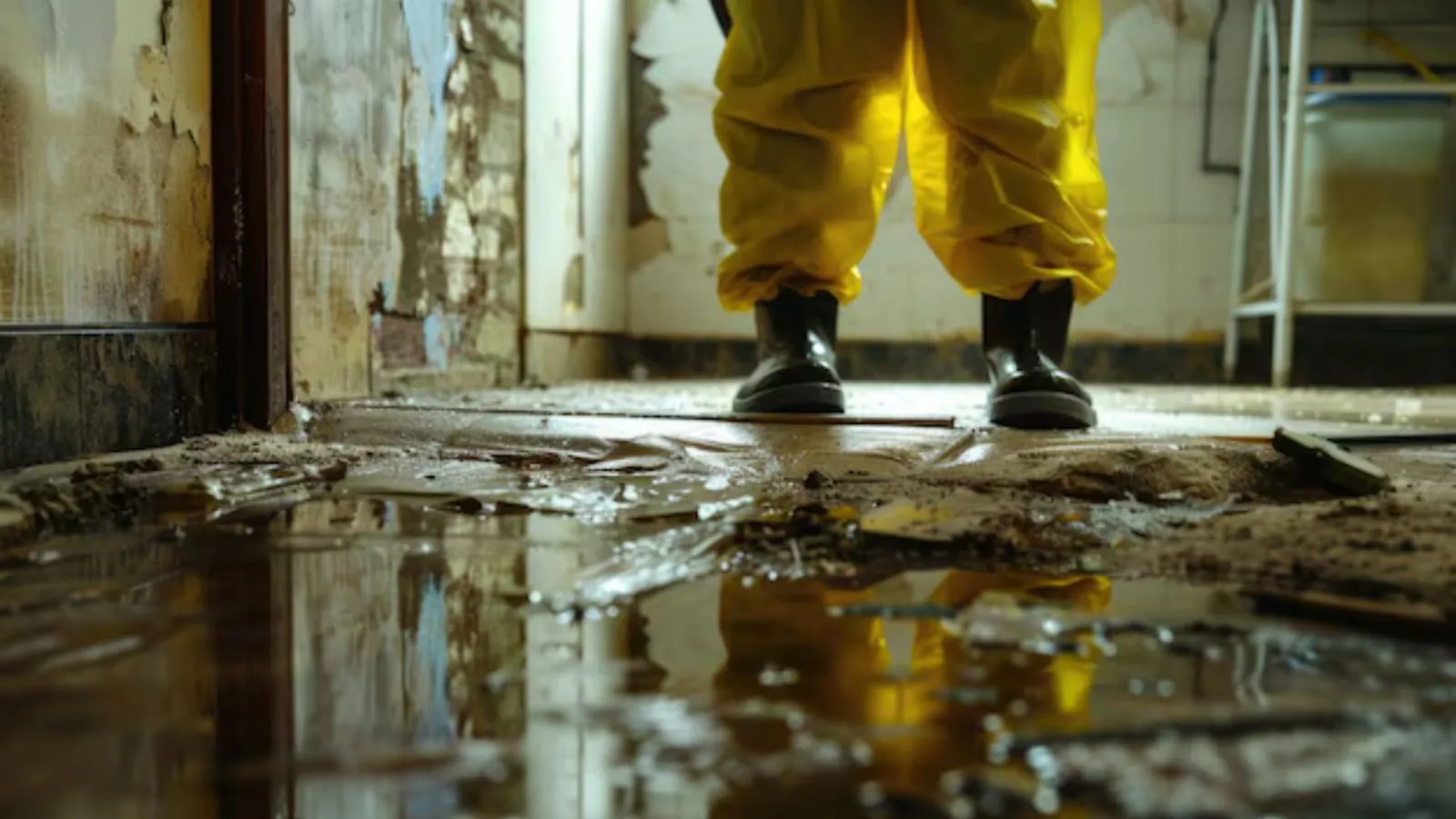
Sewage backup cleanup covers raw wastewater that comes up through floor drains, toilets, tubs and cleanouts. It is not ordinary water damage. Sewage is Category 3 water under the industry standard, which means it carries pathogens and has to be handled with protective gear and a strict process.
This page covers sewage and wastewater from sanitary lines. For floodwater from outside, see flood damage cleanup. For basement groundwater, see basement water damage cleanup.
Signs you may have a sewage backup
You may be here because a floor drain is gurgling, a toilet will not flush and water rises in the tub, or a sewer smell is coming from the basement. Those are common signs of a blocked line, and the sections below explain what to do first.
When a sewage backup is an emergency
Sewage is an emergency from the first sign. Raw wastewater carries bacteria and viruses, and contact through cuts, eyes or mouth is a real risk. Children, pets and anyone with a weak immune system should stay away until the area is cleaned and cleared.
Do not run water, flush toilets or use a dishwasher or washer while the line is blocked, since every drop adds to the backup. If you smell gas, leave and call the utility. If electrical equipment is wet, stay out and call the utility.
What Category 3 means
The ANSI/IICRC S500 standard sorts water by contamination. Category 3 water, which includes sewage and floodwater from rivers, is grossly contaminated and can cause serious illness. Porous materials that touch Category 3 water, such as carpet, pad, insulation and drywall, are removed and discarded because they cannot be cleaned reliably.
Hard surfaces are cleaned with detergent and disinfectant, and the area is dried and checked. Crews wear protective gear and may set up containment to keep contamination from spreading to clean rooms.
Finding the cause: main line or fixture
If only one fixture backs up, the clog is probably local. If several drains back up at once, the main line or the municipal sewer may be blocked. A plumber can camera the line to find the cause, which is also useful for deciding who is responsible.
The restoration crew cleans the damage. Ask your plumber or the town whether the blockage was in your lateral or in the public sewer, because the answer can affect your insurance claim.
Safe steps while waiting
Stop using water
Do not flush, run sinks, showers, dishwashers or washers until the line is clear.
Keep people out
Close doors to the affected area and keep children and pets away.
Protect yourself
If you must enter, wear rubber boots, gloves and eye protection. Wash hands thoroughly afterward.
Do not use household vacuums or fans
They can spread contamination through the house.
Photograph the damage
Take photos of the affected area and anything damaged before cleanup.
Call a plumber and the 24/7 line
The plumber clears the line and the restoration crew cleans up the damage.
Cleanup, sanitizing and clearance
A sewage job follows a set order. The crew contains the area, extracts liquid, removes contaminated porous materials, cleans and disinfects hard surfaces and dries the structure. Odor control comes last, after the source is gone. Spraying fragrance over a dirty floor does nothing.
Ask for a written scope and a clear list of what was removed. Your insurer may ask for it, and many policies cover sewer backup only with an endorsement.
Downtown homes on town sewer can read the Middleboro Center page for local context.
| Source | Sign | Who handles it |
|---|---|---|
| Single fixture clog | Only one drain affected | Plumber |
| Main drain blockage | Several drains back up | Plumber with a drain machine or camera |
| Tree roots in the lateral | Recurring backups | Plumber, possibly a line repair |
| Municipal sewer blockage | Neighbors affected | Town or sewer department |
| Septic tank issue | Slow drains, odors, wet yard | Septic professional |
Sewage in the house?
Call and tell the dispatcher what drains are affected and how far the water has spread.
What affects sewage cleanup cost
Sewage jobs cost more than clean-water jobs because of protective gear, containment and disposal. The main factors:
Area affected
Larger areas mean more removal and cleaning.
Materials affected
Carpet, pad, drywall and insulation are discarded.
Containment
Sealing off clean areas adds labor and materials.
Disposal
Contaminated materials must be bagged and removed.
Drying and odor control
Sewage jobs often need extended drying and deodorizing.
Standard homeowners policies often exclude sewer backup unless an endorsement is added. Check your policy and ask your insurer. For your own scope, call (508) 286-8971.
Sewers, septic and wastewater in Middleboro
Middleboro's sewer system is limited by catch basin capacity and aging pipes, according to the town's resilience report, which notes that sewer pipes near the fire station and library need relining. The report also records that a sump pump discharge adds flow downtown after storms, and that the Nemasket River can overtop the effluent pipes at the wastewater treatment plant, which was upgraded in 2017.
Not every address is on the sewer. In rural parts of town, septic systems handle waste, and a septic backup needs a septic professional. If you are not sure which you have, ask the town or check your property records.
Source type: Middleborough community resilience report
Frequently asked questions
Do you handle sewage backup cleanup emergencies at night or on weekends in Middleboro?
Yes. Sewage backups happen at any hour, so the line is open 24/7 and same-day response is offered when available. Tell the dispatcher which drains are affected and whether the water is still rising.
My floor drain is gurgling. Is that a sewage backup?
It can be an early sign of a blocked line. Stop using water and call a plumber. If any water has come up, call the 24/7 line.
Can I clean up sewage myself?
Small spills on hard surfaces can be cleaned with gloves and disinfectant, but anything that reached carpet, drywall or insulation, or any large backup, should be handled by trained crews.
Does homeowners insurance cover sewer backup?
Often only with a separate endorsement. Read your policy and ask your insurer before you start work.
How do I know when the area is safe again?
When contaminated materials are removed, surfaces are cleaned and disinfected and the area is dry. Ask the crew to explain what they did and what readings they took.