
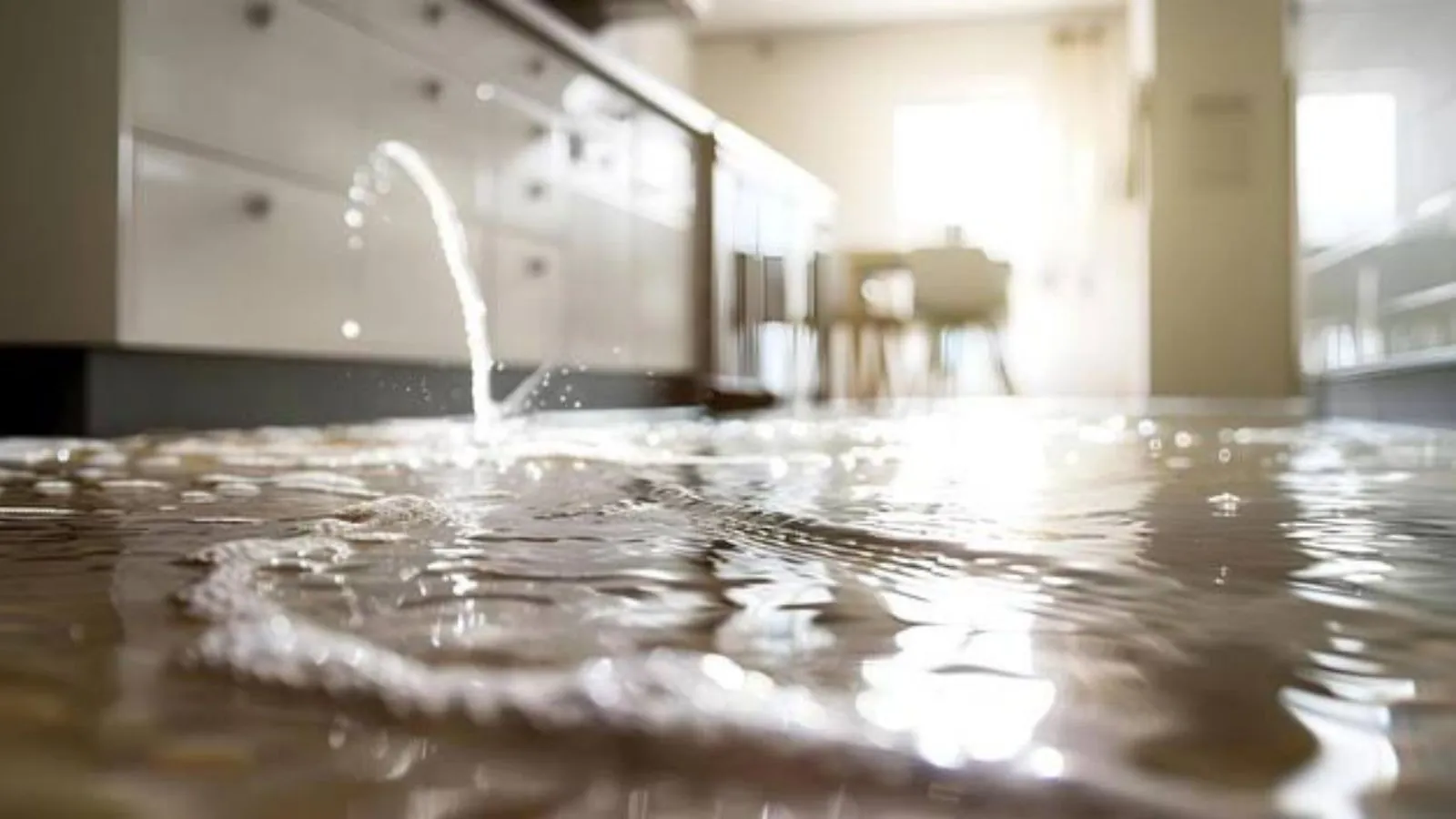
Appliance leak water damage comes from washing machines, dishwashers, refrigerators with ice makers, water heaters, softeners and similar equipment. Hose failures and overflow are the usual causes, and the damage often spreads to subfloors, cabinets and rooms below.
This page covers appliances. For a tank that leaks, see water heater leak cleanup. For a kitchen-wide leak, see kitchen water damage restoration.
When an appliance leak is an emergency
An appliance leak is an emergency when water is actively running or when it is reaching electrical outlets, floors above a finished room or a ceiling below. A washer hose can empty a tub of water in minutes, and a refrigerator line can run for days unnoticed behind the unit.
Do not unplug an appliance while standing in water. Turn off the breaker from a dry spot, or call the utility. Close the supply valve behind or beside the appliance, or shut the main.
Common appliance leak sources
Washing machine hoses can burst under pressure, and rubber hoses age out. Dishwashers leak at door seals, hoses and drain connections. Refrigerators leak from ice maker lines and drip pans. Water softeners and humidifiers add their own risks.
Braided stainless hoses resist bursting better than rubber, and an automatic shutoff valve for a washer can stop a leak before the floor gets soaked. Under ANSI/IICRC S500, appliance supply water starts as Category 1 and can degrade to Category 2 if left, so speed changes the scope.
How water spreads from appliances
Laundry rooms and kitchens sit on floors that often run over finished spaces below. Water runs down through floor openings, into ceilings and along framing. It reaches walls and carpet in rooms you may not check for hours.
Check ceilings below the appliance for stains, and check baseboards in adjacent rooms. A crew uses a moisture meter and thermal camera to trace the path.
What to do before the crew arrives
Shut off the supply
Close the valve behind the appliance or the main valve.
Cut power safely
Use the breaker from a dry spot. Do not unplug in standing water.
Move the appliance only if safe
Pulling a heavy washer through water is a strain and shock risk.
Soak up water
Use towels and a wet vacuum rated for water.
Check below
Look at the ceiling in the room under the appliance.
Photograph the damage
Capture the hose, the appliance and the water.
Drying and repair after an appliance leak
Appliance water is often clean at first, and prompt drying can save materials. After a day or two, even clean water can pick up contamination from dust and debris. The crew extracts water, dries the structure and removes materials that cannot be saved.
Appliances that were wet need a technician before they are used again. Water in the base of a washer or dishwasher can damage controls or wiring.
| Appliance | Common failure | Prevention |
|---|---|---|
| Washing machine | Burst hose | Braided hose, shutoff valve |
| Dishwasher | Door seal or hose | Check seal and hose yearly |
| Refrigerator | Ice maker line | Replace line, check drip pan |
| Water softener | Valve or tank | Inspect on service visits |
| Humidifier | Overflow | Follow manufacturer care |
Appliance leaking right now?
Close the supply, then call and describe where the water is going.
What affects appliance leak cleanup cost
Costs vary with how far the water traveled. These factors apply.
Duration
Longer leaks soak more material.
Floors below
Water that reached a finished room below adds work.
Flooring type
Hardwood and laminate need more care than tile.
Appliance repair
A technician or replacement is separate.
Drying days
Heavy flooring and subfloor take longer.
Insurance commonly responds to sudden appliance leaks, though the appliance itself and gradual leaks are often excluded. Check your policy and ask your insurer. For your own scope, call (508) 286-8971.
Laundry and kitchen leaks in Middleboro homes
Many Middleboro homes have laundry in a basement or first-floor utility area, and the town's resilience report notes that sump pump discharge adds to downtown flow after storms. A basement laundry with a floor drain sends water to the same system, so a failed hose can combine with a drain backup in a bad week.
If your laundry sits above a finished room, a pan under the machine and an automatic shutoff valve are inexpensive protection.
Source type: Middleborough community resilience report
Frequently asked questions
Do you handle appliance leak water damage emergencies at night or on weekends in Middleboro?
Yes. Appliances fail at night and on weekends, so the line is open 24/7 with same-day response when available. Tell the dispatcher which appliance it is and whether water is near outlets or a ceiling below.
Who pays when my washer hose bursts?
Homeowners policies often cover sudden water damage from a burst hose but not the appliance itself. Read your policy and ask your insurer.
Can I run the washer again?
Not until a technician checks it. Water in the base can damage controls.
How do I know if the refrigerator is leaking?
Look for water under the unit, warped floors near it and a drip pan overflowing. Pull the unit out carefully if you suspect a line.
Should I shut off the main?
If the appliance valve will not close or you cannot find it, yes. Then call a plumber.