
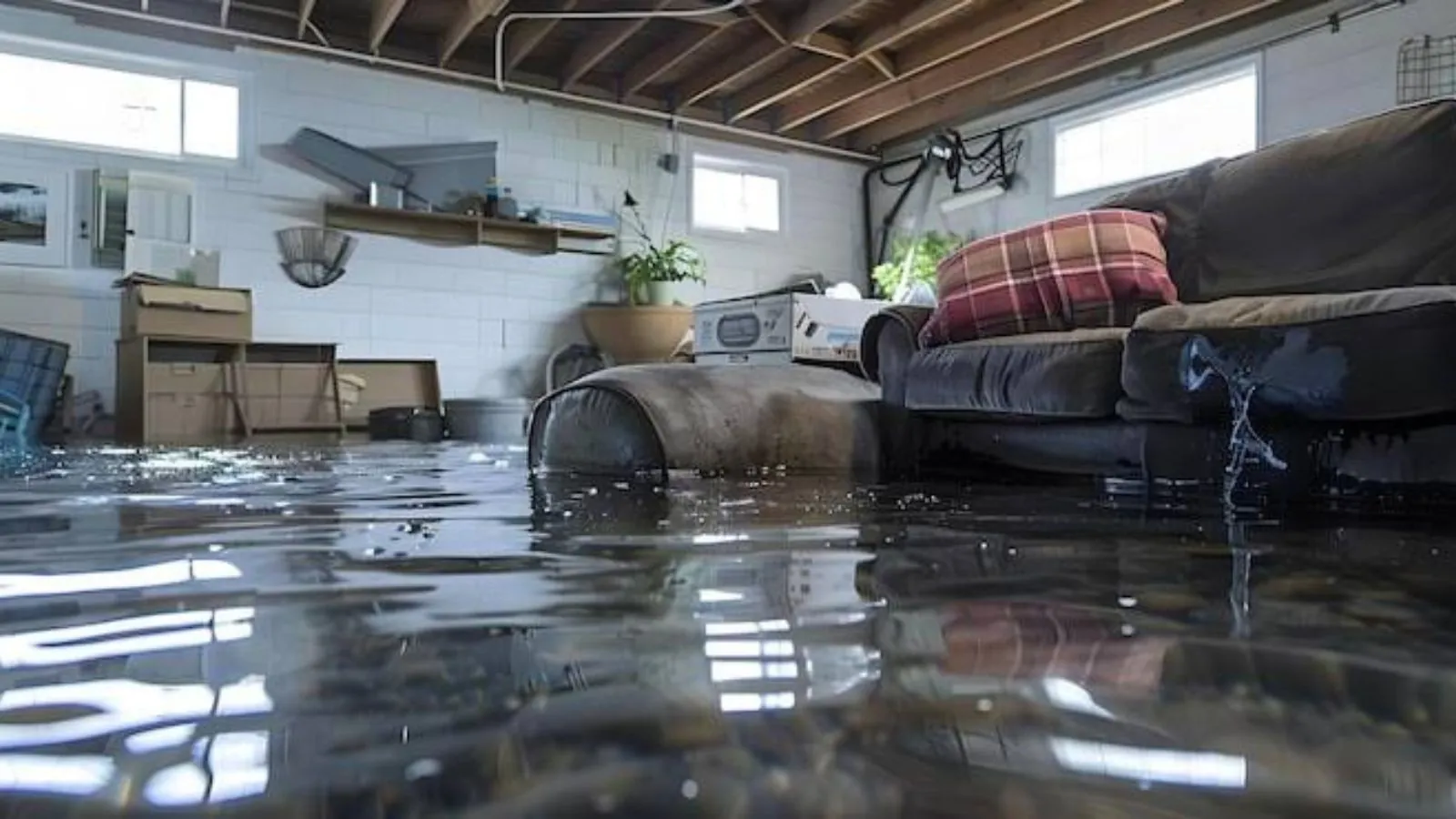
Basement water damage cleanup in Middleboro covers the below-grade room, whether it is a bare cellar, a finished family room or a bulkhead entry. Basements collect water from groundwater, a failed sump pump, a leaking foundation, a backed-up drain or a plumbing failure upstairs, and each source calls for slightly different handling.
This page focuses on the lower level itself. Floodwater through the whole house is covered under flood damage cleanup, and a sewer-source backup is handled like the loss described on sewage backup cleanup.
When a flooded basement is an emergency
A basement is an emergency as soon as water reaches the furnace, water heater, electrical panel or finished walls. These systems often sit low, and a wet panel is a shock risk. Water that stands overnight in a finished basement soaks drywall, carpet and cabinets, and the stored boxes and furniture below can be ruined within hours.
Do not go down into water if you cannot see where the outlets and cords are. If the water is rising, if you smell gas or oil or if the panel is wet, call the utility or 911 first. The restoration line comes next, and dispatchers will help you decide what to do with the power while waiting.
Why Middleboro basements take on water
Basement water has a handful of common causes. Heavy rain raises groundwater and pushes water through floor cracks and wall joints. Sump pumps fail from power outages, stuck floats or age. Gutters and grading send water against the foundation, and interior drain or supply lines break. Knowing the cause tells the crew what to dry and what to tell you to fix.
Restoration is not waterproofing. Crews dry and clean what was damaged, but a recurring leak needs a separate fix from a waterproofing, drainage or plumbing specialist. A good company says so plainly instead of promising that water will never come back. ANSI/IICRC S500 is the standard that tells a crew whether seepage, sump failure or sewer water changes the category and the handling.
Finished basements and what is behind the walls
A finished basement hides insulation, framing, wiring and sometimes old carpet glued to the slab. Water that reaches the base of the walls wicks into drywall and insulation, which is why crews often remove a strip of drywall above the waterline and open wall cavities to check readings.
Stored boxes, furniture and electronics need a decision as well. Crews can pack out and clean salvageable items, and anything that sat in contaminated water is usually discarded. Take photos of what is removed and keep a list, because your insurer may ask for both.
Before the crew arrives at the basement
Check the power first
If water is near the panel, stay out and call the utility. Do not stand in water to flip a breaker.
Know where the water is coming from
Look for a failed sump pump, a drain backing up or a leaking line. Shut the main water valve if a pipe is running.
Do not use a household vacuum
Use only equipment rated for wet use, and never plug equipment into outlets that sit in water.
Move belongings upward
Carry items to dry floors one trip at a time. Do not rush stairs while they are wet.
Keep the furnace safe
If the furnace or water heater has been under water, do not restart it until a licensed technician checks it.
Document and call
Photograph the water line, the sump pit and damaged items. Then call and describe the depth.
How a basement is dried after the water is out
After extraction, concrete slabs and block walls still hold moisture. Dehumidifiers pull water vapor out of the air while air movers push moist air off surfaces. In a cellar that stays damp, drying may continue for several days while crews log readings from the slab, the sill plate and the walls.
Keep the room closed while equipment runs and do not turn it off to save noise. If a basement stays damp after drying because of groundwater or a plumbing issue, mold can return, so tell the crew about every leak history you know.
Homes in Middleboro Center and Rock Village have their own pages with the town's storm drainage and groundwater findings.
| Source | Typical category | What the crew focuses on |
|---|---|---|
| Groundwater seepage | Category 2 or 3 | Extraction, cleanup of the slab and walls, drying and mold checks |
| Sump pump failure | Category 2 or 3 | Water removal, sump testing advice and wall and flooring drying |
| Supply line or water heater leak | Category 1 | Fast extraction and drying, often with limited tear-out |
| Drain or sewer backup | Category 3 | Treat as sewage, discard porous materials and sanitize |
Is the basement taking on water?
Call and describe the depth and whether the power is on. The dispatcher will talk through the first steps.
What affects the cost of basement cleanup
Basement jobs range from a quick extraction in a bare cellar to a full tear-out in a finished level. These drivers matter most.
Finished or unfinished
Drywall, carpet, insulation and cabinets in finished spaces add removal and rebuild work.
Water category
Seepage or sewer water means more discarding and sanitizing than a clean supply line.
Depth and duration
Water that sat for a day or more soaks deeper than a shallow spill.
Contents
Pack-out, cleaning and disposal of stored items take time.
Drying time
Slabs and block walls dry slowly, so equipment days matter.
Insurers often treat groundwater seepage and flood differently from a sudden plumbing failure, and many policies exclude them or offer limited endorsements. Read yours and ask your insurer. For your own scope, call (508) 286-8971.
Groundwater and sump pumps in Middleboro
Participants in the town's resilience workshop reported rising groundwater and high water tables that limit how much rain soaks into the ground, and they flagged sump pumps as a major contributor to post-storm flow into the sewer system downtown, where catch basin capacity is limited. For a homeowner, that means a working sump pump and a battery or backup plan matter more than most people think.
Power outages also stop private well pumps, and the same report notes that water can be out for days when that happens. If your basement floods during a storm outage, call the utility before the restoration line if any electrical equipment is wet.
Source type: Middleborough community resilience report
Frequently asked questions
Do you handle basement water damage emergencies at night or on weekends in Middleboro?
Yes. Basement floods often happen in storms at night or on weekends, so the line is open 24/7 and same-day response is offered when available. Tell the dispatcher about the depth and whether the panel or furnace is near the water.
Does restoration stop a basement from flooding again?
No. Restoration dries and cleans what was damaged. A recurring leak needs waterproofing, drainage or plumbing repair from the right specialist, and a good restoration company will say so.
Should I run a dehumidifier myself in a damp basement?
A household dehumidifier helps with mild dampness, but it cannot dry a flooded slab and walls. For real water loss, crews use higher capacity equipment and track readings.
Is mold likely after a basement flood?
Mold needs moisture and time. EPA guidance is to dry wet materials within 24 to 48 hours. If it has been longer, ask for a moisture assessment and see mold remediation.
What if my basement floods during a power outage?
Call the utility if anything electrical is wet, then call the restoration line. Without power, a crew can bring generators or extraction equipment that does not depend on your electrical service.