
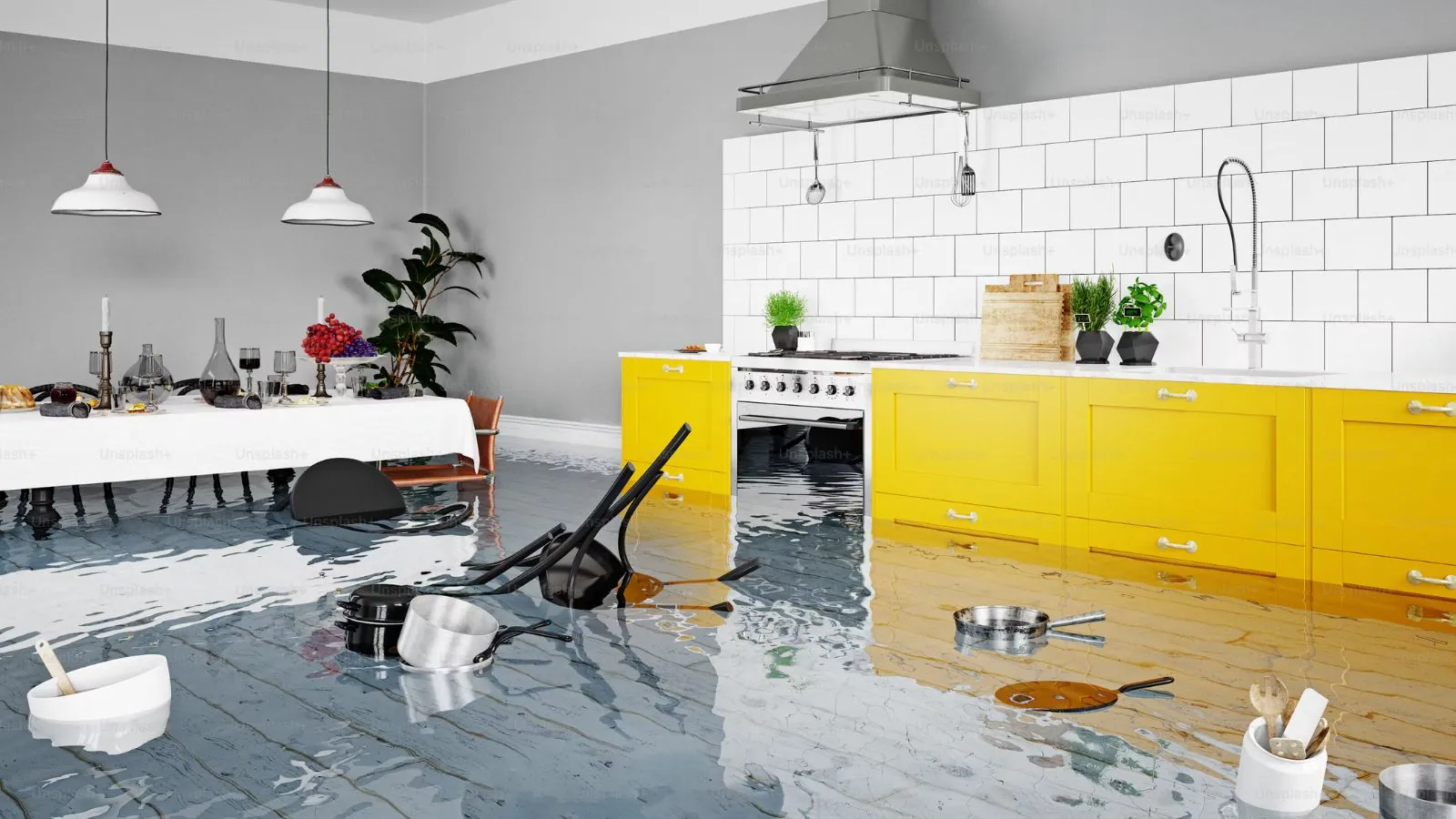
Kitchen water damage restoration covers leaks from sinks, dishwashers, refrigerator water lines, ice makers, garbage disposals and supply lines. The water often runs behind cabinets and under flooring, so a small puddle can hide a big wet area.
Cabinets, laminate counters and hardwood floors react differently to water, and so a careful assessment matters. For leaks that start at an appliance, appliance leak water damage covers the specifics.
Where kitchen leaks start
The most common kitchen leaks come from supply lines under the sink, dishwasher hoses, refrigerator water lines and clogged drains. A slow leak can run for months before the cabinet floor goes soft. Look for swelling at the base of cabinets, warped flooring near the dishwasher and a musty smell under the sink.
Shut off the supply valve for the fixture, or the main valve if you cannot find it. Then pull items out from under the sink and photograph the area. ANSI/IICRC S500 is the standard a kitchen drying plan should follow, including the water category for a dishwasher or supply-line leak.
Cabinets, flooring and countertops
Particleboard cabinets swell and crumble when wet and generally cannot be saved. Plywood and solid wood cabinets dry better. Toe kicks and cabinet bases are often removed so the subfloor and wall bottoms can dry.
Flooring depends on type. Tile is usually fine, but water under tile can soften the underlayment. Vinyl and laminate trap water, and hardwood cups. If the floor continues under the cabinets, drying can take longer.
What to do after a kitchen leak
Shut off the supply
Close the shutoff under the sink or the main valve.
Unplug nearby appliances
Pull plugs only if you can do it without standing in water.
Empty the cabinet
Remove items from under the sink and from wet cabinets.
Wipe and ventilate
Wipe standing water and run fans or open windows in dry weather.
Photograph everything
Capture the leak source, the cabinets and the floor.
Call a pro
A plumber fixes the leak. A restoration crew dries the room.
Drying behind and under everything
Water often runs under the cabinets to the next room. Crews drill small holes in toe kicks and use air movers or drying mats to move air through the cavity. Moisture readings guide whether to remove more material.
Keep appliances unplugged until the area is dry and a technician has checked them. Water in a refrigerator compressor compartment or dishwasher base can cause electrical problems.
| Material | Reaction | Usual outcome |
|---|---|---|
| Particleboard cabinets | Swell and crumble | Replace |
| Plywood cabinets | Swell at edges | Dry or replace the base |
| Laminate flooring | Edges lift | Replace |
| Tile with grout | Usually fine, underlayment may soften | Dry and check |
| Hardwood | Cups and buckles | Dry slowly, refinish or replace |
Is your kitchen floor wet?
Call and describe the source and how long water has been running.
What affects kitchen restoration cost
Kitchens are dense with materials, so scope varies widely.
Cabinets
Replacing cabinet bases or runs adds the largest share.
Flooring type
Hardwood and laminate cost more to repair than tile.
Appliance involvement
Moving or testing appliances adds labor.
Water category
A dishwasher with dirty water is different from a clean supply line.
Rebuild
Counters, backsplash and paint are separate from drying.
Insurance often responds to sudden leaks and may exclude gradual ones. Check your policy and ask your insurer. For your own scope, call (508) 286-8971.
Older kitchens and newer leaks in Middleboro
Middleboro was incorporated in 1669 and its housing stock spans many eras, and kitchens in older houses often have original plumbing under newer cabinets. Supply lines, shutoff valves and sink traps age out, and a small drip can rot a cabinet floor over time.
If your kitchen is older than the last time the supply lines were replaced, treat the lines as a scheduled maintenance item. A plumber can swap them in minutes, and braided stainless lines resist bursting.
Source type: Town of Middleborough history summary
Frequently asked questions
How fast do kitchen cabinets get ruined by water?
Particleboard can swell within hours, while plywood takes longer. Dry the cabinet floor quickly and check the sink base often.
Can the dishwasher be the cause?
Yes, hoses, door seals and drain lines are common sources. Inspect them if floors near the dishwasher feel soft.
Do I need to remove the cabinets to dry the floor?
Often only the toe kick and base are removed. Whole-run removal is needed when water spread under the cabinets.
Will my kitchen smell like mold?
Wet cabinets and subfloors can smell musty within days. Dry quickly, and see mold remediation if the smell persists.