
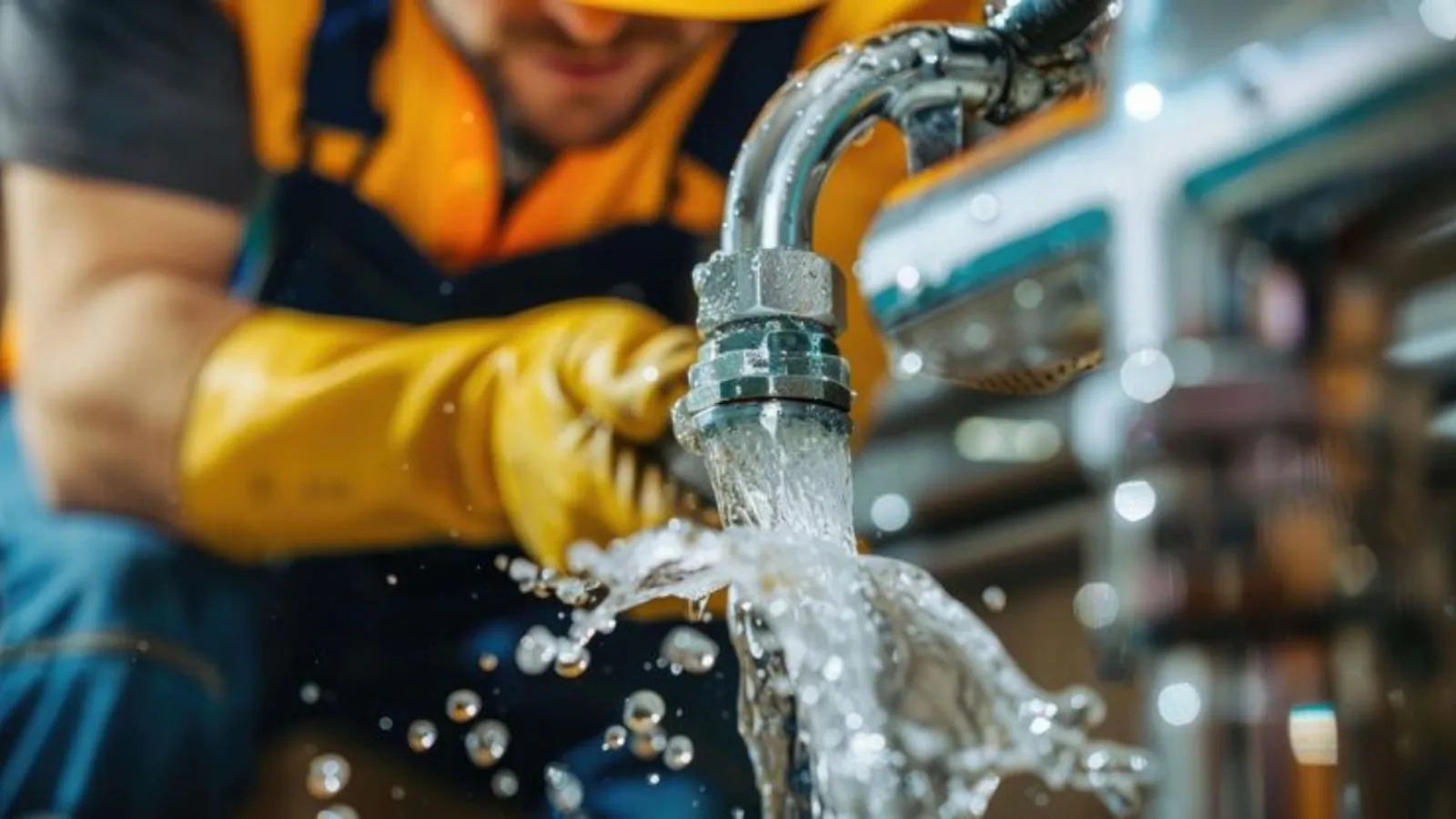
Burst pipe water damage is one of the fastest ways a home gets wet. A split supply line can release hundreds of gallons in an hour, and a pipe inside a wall or ceiling can run for a long time before the water shows. The first job is always to stop the water. The second is to get it out and start drying.
This page covers supply-line failures. If the pipe froze first, see frozen pipe water damage. If the water came from the slab, see slab leak water damage.
When a burst pipe is an emergency
A burst pipe is an emergency from the first minute. Water under pressure keeps flowing until the supply is shut, and it follows framing, wiring and plumbing chases into rooms you cannot see. A single inch of water over 1,000 square feet is about 623 gallons, which a split pipe can deliver quickly.
Shut off the main valve first. If you cannot find it or it will not turn, call your water utility. Do not touch electrical gear while standing in water. If water is coming through a ceiling light, stay clear and turn the breaker off only from a dry spot.
Finding and stopping the source
Most homes have a main shutoff where the water line enters, often in the basement, a utility closet or near the water meter. Learn where yours is before you need it. If a fixture has its own shutoff valve, such as under a sink or behind a toilet, closing it may stop a local leak without shutting off the whole house.
Once the supply is off, open the lowest faucet and flush toilets to drain what remains in the lines. Draining reduces how much water is left to leak at the break and eases the repair. A plumber fixes the pipe. A restoration crew handles the water damage. ANSI/IICRC S500 classes a fresh supply-line break as Category 1 water, which is the reason fast drying can save materials that dirty water would not allow.
What a burst-pipe cleanup involves
Because burst-pipe water comes from a clean supply, it is usually Category 1 at first. That gives more options to dry materials in place, but only if the response is fast. After about a day, clean water can become Category 2, and materials that sat wet longer may need removal.
The crew extracts standing water, uses moisture meters and thermal imaging to find water in walls and ceilings and sets up air movers and dehumidifiers. If water is trapped behind a wall or ceiling, small holes or openings let the crew dry the cavity. See structural drying for details.
Before the crew arrives
Shut off the main water
Turn the main valve clockwise until it stops. If it fails, call the water utility.
Cut power only if safe
Turn off breakers for wet rooms if the panel is dry. If water reached the panel, stay out and call the utility.
Drain the lines
Open a low faucet and flush toilets to release water still in the pipes.
Move belongings
Lift furniture legs onto foil and move books, electronics and paper to dry areas.
Photograph the break
Take photos of the pipe, the water and the damage before cleanup begins.
Call both
Call a plumber for the pipe and the 24/7 line for water removal.
Hidden damage and slow leaks
Not every burst is dramatic. A pinhole leak or a joint failing in an attic can drip for weeks, soaking insulation and framing. Signs include a rising water bill, a stain on a ceiling, a hissing sound when everything is off or a musty smell.
If your bill jumped with no change in use, check the meter with all fixtures off. If the dial moves, you have a leak. A plumber can locate it, and the restoration side can dry the damage once it is repaired.
The South Middleboro page covers well and water-supply issues in the south end.
| Where it burst | Usual damage | Typical response |
|---|---|---|
| Inside a wall | Wet drywall and insulation | Open the wall, dry the cavity and replace board |
| In a ceiling | Stained or sagging ceiling and wet insulation | Relieve pooled water, dry and repair |
| Under a sink | Wet cabinet floor and subfloor | Remove cabinet base materials and dry |
| In a basement | Wet slab, stored items and finished walls | Extract, remove finishes and dry |
| In an attic | Wet insulation and ceiling below | Remove wet insulation and dry framing |
Water still running?
Shut the main first, then call. Describe where the water is going and the dispatcher will go through the next steps.
What affects burst pipe cleanup cost
Burst pipes range from a bathroom floor to a whole house. These factors set the scope.
How long water ran
Longer runs soak more materials.
Where the water went
Water inside walls and ceilings needs opening and cavity drying.
Materials affected
Hardwood, cabinets and finished drywall cost more than tile or concrete.
Water category
Clean water gives more options to dry in place.
Plumbing repair
The plumber's repair is separate from restoration.
Insurance commonly responds to sudden and accidental pipe bursts, but it often excludes gradual leaks and may not pay for repairing the pipe itself. Read your policy and ask your insurer. For your own scope, call (508) 286-8971.
Water supply in Middleboro homes
Most Middleboro homes use the town's municipal water system, which has its own state public water supply identification, 4182000, with the East Main Street plant and the East Grove Street facility. The resilience report notes that some lines, including Wareham Street and East Grove Street, have few redundancies, so repairs can affect water pressure for neighbors.
Some homes use private wells. In a burst-pipe emergency, a well pump keeps pushing water until the breaker is off, so the shutoff for a well house is the pressure tank valve and the pump breaker. If you are unsure which you have, check your water bill.
Source type: Middleborough community resilience report
Frequently asked questions
Do you handle burst pipe water damage emergencies at night or on weekends in Middleboro?
Yes. Pipes burst at night, on weekends and during holidays, so the line is open 24/7 and same-day response is offered when available. Tell the dispatcher where the main valve is and whether water is near the electrical panel.
Is a burst pipe covered by homeowners insurance?
Sudden and accidental pipe bursts are often covered, while gradual leaks are often excluded. Your policy wording decides, so ask your insurer before you sign a work order.
How quickly should I call after a pipe bursts?
Immediately, after shutting off the water. Wet materials need to start drying within 24 to 48 hours to limit mold.
Can you fix the pipe itself?
Pipe repair belongs to a plumber. The restoration crew dries the structure. Both are often needed, and the dispatcher can tell you which to call first.
How do I know if a pipe burst inside the wall?
Look for stains, bubbling paint, a musty smell, a hissing sound with fixtures off or a jump in your water bill. A moisture meter confirms it.