
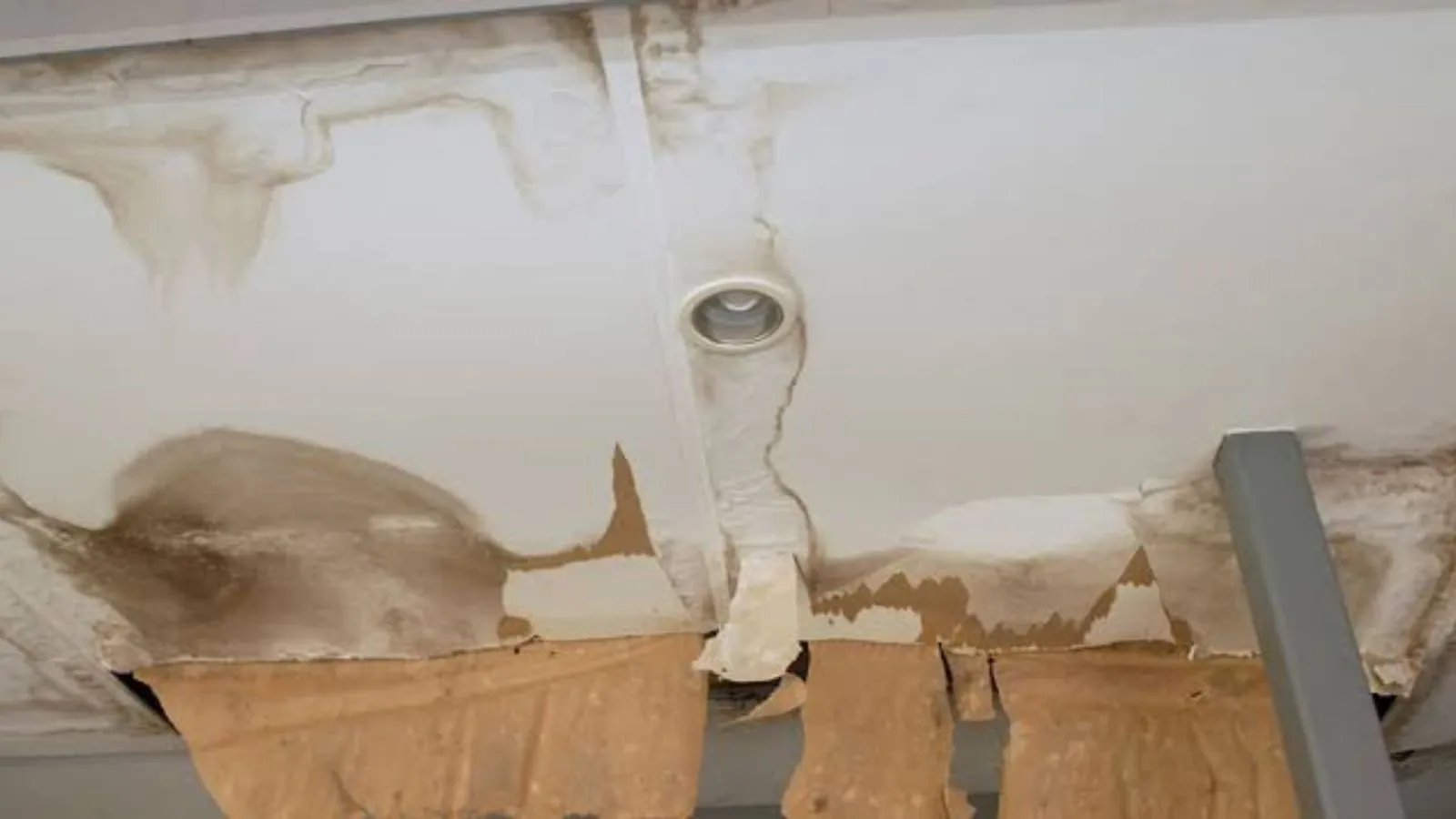
Ceiling water damage repair in Middleboro starts above the ceiling. A stain or sag is only the end of a path, and the water may have come from a roof leak, an upstairs bathroom, a supply line or an air handler in the attic. This page covers the finished ceiling and what is above it, including roof-leak damage that reaches the living space.
Crews find the moisture path, dry the ceiling and insulation, replace what failed and prepare the surface for repair. The roof or plumbing repair itself comes from a roofer or plumber. If the leak started at an appliance, see appliance leak water damage.
When a ceiling leak is an emergency
A ceiling is an emergency when it sags, bulges, drips steadily or glows from a light fixture. Drywall holds a surprising amount of water, and a bulge can collapse. A collapse can drop wet drywall, insulation and sometimes a ceiling fan onto people below, so clear the room first.
Water around lights or a ceiling fan is an electrical risk. Turn off the breaker for that circuit only if you can reach the panel without crossing wet floor, and call the utility if you are not sure. Never lean a ladder against a wet ceiling, and never stand under a bulge to poke it.
Finding where the water enters
Water travels along framing, pipes and ducts before it shows on a ceiling. A stain right under a roof valley often points to flashing. A stain near a bathroom suggests a tub, shower or supply line. A damp patch in a hallway below an attic may be condensation or a duct. Crews use moisture meters and thermal imaging to follow the path instead of guessing.
The cause decides the category of water and the repair. Roof water that soaks insulation becomes dirty and heavy. Clean supply water is simpler. Once the moisture path is known, the crew can tell you whether you need a roofer, a plumber or just drying and repair.
Roof leaks that reach the ceiling
A roof leak starts as water through decking or flashing, then soaks insulation above the ceiling and finally stains the drywall. By the time you see brown rings, the attic may have been wet for days. Drying the cavity, replacing saturated insulation and treating the framing prevent odor and mold behind the paint.
A tarp or a temporary patch can reduce water entry until the roofer arrives, and your insurer may ask for temporary protection steps. Keep receipts. Water damage from a roof leak is a ceiling loss for restoration purposes, which is why roof leaks do not have a separate page on this site.
What to do while the ceiling is leaking
Clear the area
Move people, pets and furniture out from under a sag or drip. Place buckets and plastic sheeting under active leaks.
Relieve a bulge only if safe
A small hole at the lowest point can drain trapped water. Stand to the side, wear eye protection and do not stand under it.
Think about the electrical risk
If water is near lights or a fan, turn off that circuit only if the panel is dry and reachable. Do not touch wet switches.
Check the obvious sources
Look for an overflowing tub or a running appliance upstairs and shut off the supply if you find one.
Photograph the damage
Capture the stain, the source area and any attic wetness before cleanup.
Call and describe it
Tell the dispatcher what is above the ceiling and how large the stain or sag is.
Repairing the ceiling after drying
A ceiling can be repaired only after it is dry. Crews cut out sagging or stained drywall, dry the framing and replace insulation if needed. Then the drywall is patched and finished, and the ceiling gets primed with a stain-blocking primer before paint so the old stain does not return.
Texture matching and full-ceiling painting are common, because a patch under old paint tends to show. Rebuild work is often priced separately from drying. For wall damage that came with the leak, see wall and drywall water damage repair.
| What you see | Likely source | Next step |
|---|---|---|
| Brown ring with sharp edge | Past or slow leak | Find the source, dry the cavity and check for mold |
| Active drip during rain | Roof or flashing | Temporary protection, then roof repair and ceiling drying |
| Bulge or sag | Trapped water in drywall | Clear the area, drain safely and call right away |
| Stain below a bathroom | Supply line, tub or shower | Shut off water, then plumbing repair and drying |
| Damp patch near attic ducts | Condensation or a duct leak | Dry insulation and fix the duct |
Ceiling dripping or sagging?
Call and say how big the stain is and what sits above it. The dispatcher will give you safe steps right away.
What affects ceiling repair cost
Ceiling repair is priced by scope, and a stain can hide a big or a small job. These factors count.
Size and condition of the ceiling
A bulging or collapsed ceiling costs more than a small stain.
What is above it
Wet insulation, attic framing and mechanical equipment add removal and drying.
Water category
Roof water or an old leak can add cleaning and disposal compared with clean supply water.
Finish and texture
Matching texture and painting a full ceiling takes more labor than a spot patch.
Access
Cathedral ceilings and stairwells add equipment and time.
Insurance commonly responds to sudden roof and plumbing damage and often does not cover long-term seepage or wear. Check your policy and ask your insurer. For your own scope, call (508) 286-8971.
Winter and storm roof loads around Middleboro
Federal disaster declarations that included Plymouth County cover winter storms in February 2013, January 2015, April 2015 and March 2018, according to a neighboring town's hazard mitigation plan. Heavy snow and ice stress roofs, and melt water can work its way under shingles and into ceilings.
After a storm like that, check ceilings and upper walls for new stains, especially under valleys, chimneys and skylights. A small stain found early is cheaper to dry than one that sat for a season.
Source type: Federal declaration list in a Plymouth County hazard mitigation plan
Frequently asked questions
Do you handle ceiling water damage repair emergencies at night or on weekends in Middleboro?
Yes. Ceiling leaks tend to show up during storms or after a plumbing failure at night, so the line is open 24/7 with same-day response when available. Tell the dispatcher about sagging, dripping and any light fixtures near the water.
Is a ceiling stain always an emergency?
A dry old stain is not an emergency, but a wet, sagging or dripping ceiling is. If it is damp, treat it as active and call.
Do you repair roofs?
Roof repair belongs to a roofing contractor. Restoration crews dry the ceiling, attic cavity and insulation and repair the finished ceiling. Temporary protection can be arranged while you hire a roofer.
Can I just paint over a ceiling stain?
Paint alone usually lets the stain bleed back, and it hides moisture that can lead to mold. The ceiling should be dried, stained areas primed and failed drywall replaced.
Will my insurance cover a leaking ceiling?
Coverage depends on the cause. Sudden roof or plumbing damage is often covered and long-term leaks often are not. Ask your insurer and keep photos and receipts.