
What a homeowner can handle
A small spill from a clean source, such as an overfilled sink or a glass of water, is a good DIY job. Soak up the water with towels, wipe the surface, run a fan and open a window in dry weather. Check the area again after a day for dampness, staining and odor.
If the water touched only a hard surface and nothing soaked in, you are likely fine. If you are unsure, press on the floor and wall edges with a dry paper towel. Moisture on the towel means the material is still wet.
The 623-gallon problem
One inch of water over 1,000 square feet is about 623 gallons and more than 5,000 pounds. A household wet vacuum holds a few gallons. Towels and fans cannot move that volume, and what stays behind soaks into carpet, pad and framing.
That is the first reason to call a pro. The second is hidden moisture. Walls, floors and insulation can look dry and still be wet inside.
Signs you need equipment
Call if water has spread beyond one room, if carpet or pad is soaked, if drywall feels soft or looks stained, if the water ran for hours, if it came from a dirty source or if anyone has breathing problems. Also call if the floor feels cool and damp days later.
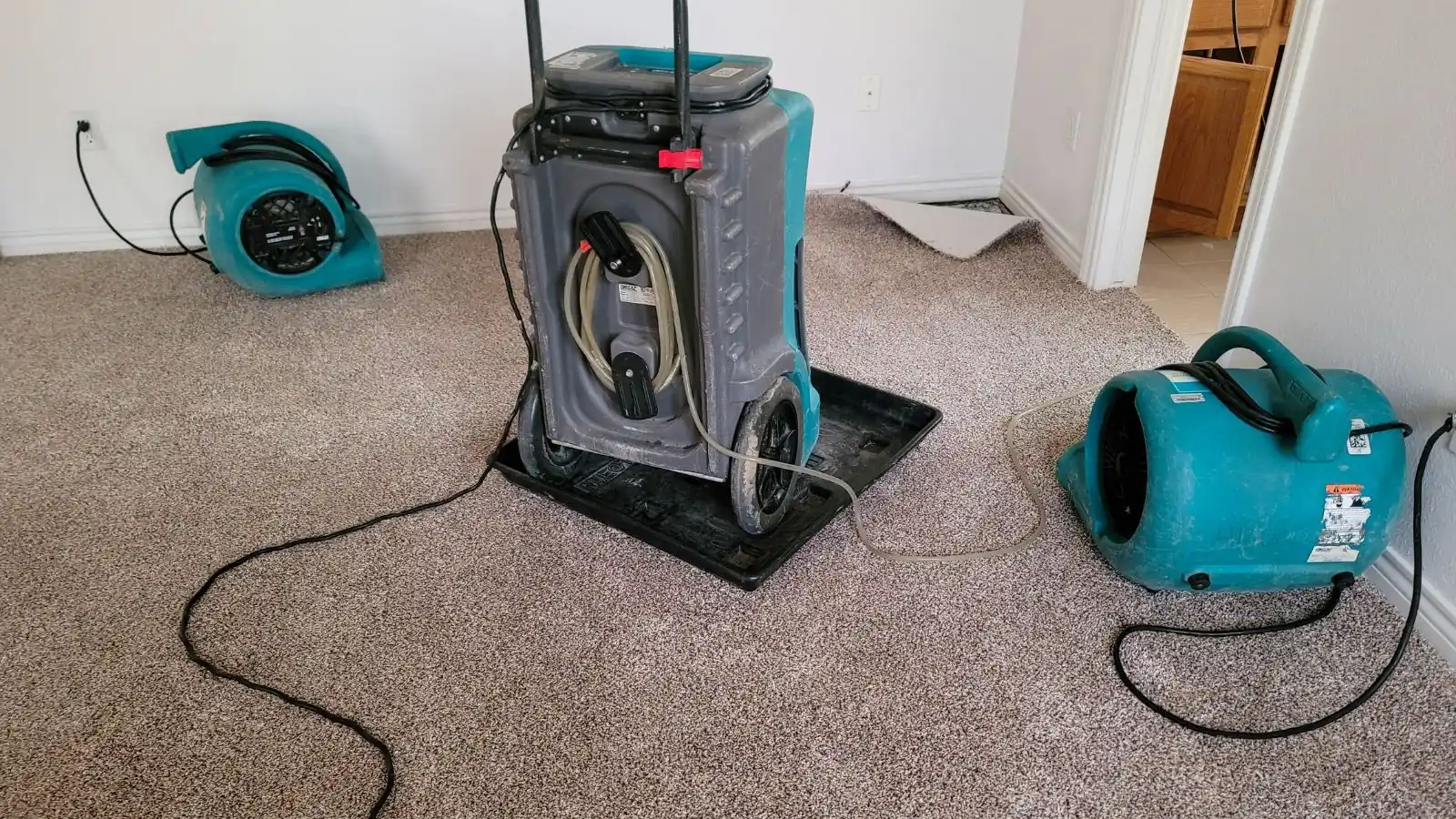
Water extraction and structural drying and dehumidification explain what equipment does and why a fan alone is not enough.
| Situation | Likely approach | Reason |
|---|---|---|
| Small clean spill on tile | DIY | Surface only |
| Wet carpet from a clean source, under 24 hours | Call for advice | Pad and subfloor may be wet |
| Soaked drywall or ceiling | Professional | Hidden moisture |
| Flood, sewage or roof water | Professional | Contaminated water |
| Water for more than a day | Professional | Mold risk |
When the water is not clean
Water from a toilet, a drain, a washer overflow with detergent, a flood or a roof leak through insulation is not clean. The industry standard calls the worst water Category 3. It can carry bacteria and viruses. Porous materials that soak it up are generally discarded.
Do not clean that kind of water without protection. Gloves, boots and eye protection are the minimum, and large areas should be left to trained crews.
Safety first in either case
Never stand in water if outlets, cords or appliances are involved. Turn off power from a dry spot or call the utility. Do not use a household vacuum on wet floors, and do not run a generator indoors or in an attached garage.
Lift heavy things safely and do not rush stairs while they are wet. A fall or a shock costs far more than the damage.
A middle path: DIY the first hour, call for the rest
Many homeowners do best by doing what they safely can in the first hour, such as shutting off the water, moving belongings and photographing, and then calling for readings and drying. That keeps the damage from growing and gives the crew a head start.
If you rent equipment, ask the rental counter for a dehumidifier as well as fans. Fans alone move damp air around.
Cost versus risk
DIY looks cheaper until mold, warped floors or a failed claim show up. A moisture check costs little compared with replacing walls. Weigh the risk, not just the bill.
If you are not sure, call and describe what happened. The dispatcher can tell you whether a visit makes sense.
What a pro measures that you cannot
A moisture meter reads water content in drywall, wood and concrete. Thermal imaging shows cool, wet areas behind surfaces. A psychrometer measures temperature and humidity so the crew can size dehumidifiers. These tools turn a guess into a plan.
Without them, a homeowner usually stops drying when the surface feels dry. Materials deeper in the assembly keep releasing moisture for days.
Common DIY mistakes
The most common mistake is running only fans. Fans move damp air around the house and can push moisture into walls and rooms that were dry. The second is opening windows on humid days, which brings more moisture in. The third is painting or sealing before the structure is dry.
Another mistake is leaving wet carpet pad in place. Pad holds water for a long time and is hard to clean.
How to hire well if you decide to call
Describe the loss clearly, ask about the standard they follow and request a written scope. Ask what readings you will receive and when the crew will return. Check that the company has a real local address and phone line that is answered.
Whoever you call, the key point is to understand the plan before work begins and to ask for the scope in writing.
A realistic DIY drying checklist for small clean spills
For a small clean-water spill, work in this order: stop the source, soak up standing water, lift rugs and furniture, run a fan with a dehumidifier if you have one and keep the room closed. Check baseboards and the floor edge by touch for the next two days.
If anything still feels cool or damp after 48 hours, stop guessing and have the area checked with a meter.
Where to go next
Nearby help is described on the pages for Lakeville and Carver.
Not sure if you can handle it yourself?
Describe the spill or the leak and the dispatcher will say plainly whether a visit makes sense.
Power and wells in Middleboro outages
The town's resilience report notes that some Middleboro homes use private wells and that pumps fail during power outages. A power cut can also stop sump pumps. If a storm outage meets a wet basement, DIY options narrow quickly.
Know where your breaker panel and main water shutoff are before a storm. Charge your phone and keep a flashlight handy.
Source type: Middleborough community resilience report
Frequently asked questions
Can I rent a dehumidifier and dry my house myself?
A rental unit can help with mild moisture. For a real loss, you also need moisture readings and the right number of air movers, and a rental alone rarely gets materials to the dry standard.
How do I know if the floor is still wet underneath?
A moisture meter is the reliable way. Without one, press a dry paper towel against the floor and baseboards. Cool, damp or cupped flooring suggests moisture.
Is it okay to leave a wet carpet for a day?
Long delay raises mold risk. EPA guidance is to dry within 24 to 48 hours. Start drying immediately and call if it does not dry fast.
What do I tell the dispatcher in Middleboro?
Say where the water came from, how deep it was, how long it sat, which rooms are wet and whether power is on.