
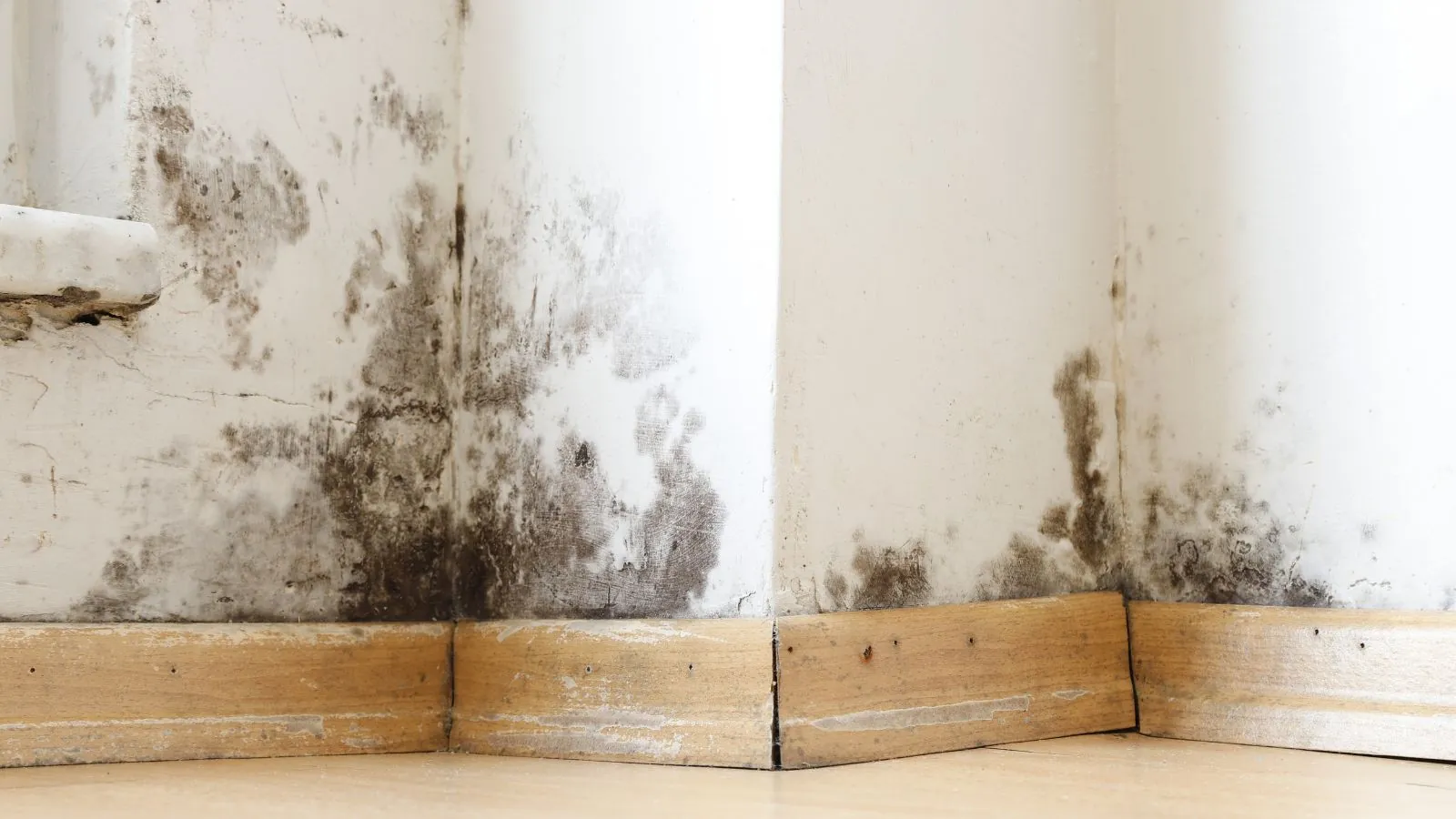
Why bathrooms grow mold
Mold needs moisture, a food source and time. A bathroom supplies all three. Steam from showers lands on walls and ceilings, soap film and dust feed growth, and grout, caulk and drywall stay damp for hours.
The EPA advises keeping indoor humidity below 60 percent. A bathroom without a working exhaust fan routinely goes far above that after a shower, and mold appears along the ceiling, in corners and around the tub.
The EPA publishes consumer guidance on mold cleanup that backs the small-patch rule above, and ANSI/IICRC S520 is the professional standard for larger jobs.
What to do yourself and what to leave alone
A small patch on a hard, nonporous surface such as tile, glass or a tub is a reasonable DIY job. The EPA guidance is to clean it with detergent and water, scrub, rinse and dry the area completely. Wear gloves, eye protection and a mask.
Bleach is not required and does not penetrate porous materials. Do not mix bleach with ammonia or other cleaners, since that can create toxic fumes. Ventilate the room while you work.
When to stop and call a professional
Call for help if the mold covers a large area, if it has soaked into drywall or insulation, if the smell is strong with no visible source or if anyone in the home has breathing problems. Water damage behind a tub or shower wall is also a reason to stop.
If the mold followed a leak, fix the leak first. A plumber stops the water. A crew then handles the moisture and the mold. See mold remediation for how containment and removal work.
| Situation | Likely approach | Why |
|---|---|---|
| Small speck on grout or caulk | Clean and dry | Surface growth on hard material |
| Patch on painted ceiling | Clean carefully, find the moisture | May come from steam or a leak above |
| Soft or stained wall near the tub | Call a professional | Moisture likely inside the wall |
| Mold after a pipe leak | Call a professional | Drying and containment needed |
| Large area or strong odor | Call a professional | Hidden growth likely |
Hidden moisture behind the walls
Surface mold can be the tip of a larger problem. A leaking shower valve or tub drain can wet the wall cavity for months. Signs include bubbling paint, a soft floor near the tub, a musty smell and stains on the ceiling below.
A moisture meter can find what the eye cannot. If readings are high behind the wall, the wall may need to be opened and dried. Wall and drywall water damage repair explains that stage.
Prevention that actually works
Run the exhaust fan during every shower and for 20 to 30 minutes after. Make sure it vents outside and not into the attic. Squeegee glass and tile, wash towels and mats often and repair failed caulk. Keep the door open if the room has no fan.
A dehumidifier can help in a small bathroom or basement. Check that the fan moves air by holding a tissue to it.
Testing and clearance
Visual inspection and moisture readings usually matter more than air sampling. If you do want testing, an independent assessor who does not also sell the cleanup avoids a conflict of interest. After cleaning, the area should be visibly clean, dry and free of odor.
Ask for a written scope before any work and ask how the crew will keep spores from spreading to other rooms.
Signs the mold is more than a surface problem
Look for a spongy floor around the tub, loose tiles, mold that returns within days, black spots on the ceiling below the bathroom and a musty smell when the fan is off. These point to moisture inside the wall or floor.
A bathroom that has had a past leak, a tub drain repair or a failed shower pan is more likely to have hidden growth. Tell any contractor about the history.
What a professional bathroom job looks like
A professional job starts by finding the moisture source. The crew then contains the bathroom with plastic barriers, uses a HEPA air scrubber to catch spores and removes contaminated drywall, caulk and flooring. They dry the framing and clean the space before it is rebuilt.
Rebuilding is usually a separate step done by a plumber, tile setter or drywall finisher. Ask the company how it will hand off the dry-out readings to the next trade.
Fixing the cause so the cleaning lasts
Replace failed caulk, repair grout, fix a leaking valve and upgrade a weak fan. Make sure the fan vents outside and has a clear duct. In small bathrooms with no window, run the fan with the door cracked to pull in dry air.
If the room has persistent humidity, a small dehumidifier or a timer switch on the fan can help. These cost little compared with removing mold twice.
A simple routine after every shower
Open the shade or door to dry the room, run the fan, wipe the tub walls and glass with a squeegee and hang towels to dry. Open the window if the weather allows. This takes under two minutes and cuts moisture sharply.
Once a month, check caulk lines and the base of the tub. Any gap or darkening is a sign water is finding a way in.
Rentals, shared walls and who to call
If you rent, tell the landlord in writing as soon as you see mold, with photos. Do not try to tear out walls yourself. In condos, a leak from a neighbor's unit is a shared problem, so notify the association or manager.
The crew can document readings and conditions for the landlord or manager, which often speeds repairs.
Where to go next
The same crews work in Lakeville and East Freetown.
Mold behind a wet wall?
Describe the room and the leak history. A moisture check shows whether this is a cleaning job or a removal job.
Damp seasons in Middleboro
Plymouth airport recorded roughly 48 inches of rain a year on average from 2000 to 2021, with 2018 the wettest year at about 61 inches. In wet years, outside air carries more moisture, which makes ventilation work harder.
The town's resilience report also notes rising groundwater and high water tables. Bathrooms in lower levels and homes near wet ground can stay humid longer.
Source type: State hazard summary of Plymouth airport rainfall, Middleborough community resilience report
Frequently asked questions
How do I know if black stuff in my shower is mold?
Mold often looks black, green or gray, with a musty smell. Mildew on grout is common. If it returns quickly after cleaning, look for hidden moisture.
Is bathroom mold dangerous?
Mold can trigger allergies and breathing problems in some people. If someone in your home is sensitive, keep them away from the cleanup and consider a professional.
Will painting over mold fix it?
No. Paint hides the stain and traps moisture. Clean or remove the mold and fix the moisture first.
Do Middleboro bathrooms need a special fan?
Any exhaust fan that moves air outside works. Size matters, and a fan that does not vent outside does not solve the humidity problem.